
July 30, 2019
Pilgrimage Road and Palestinian Memory
An ancient staircase to the Temple Mount says plenty about Jerusalem’s history.
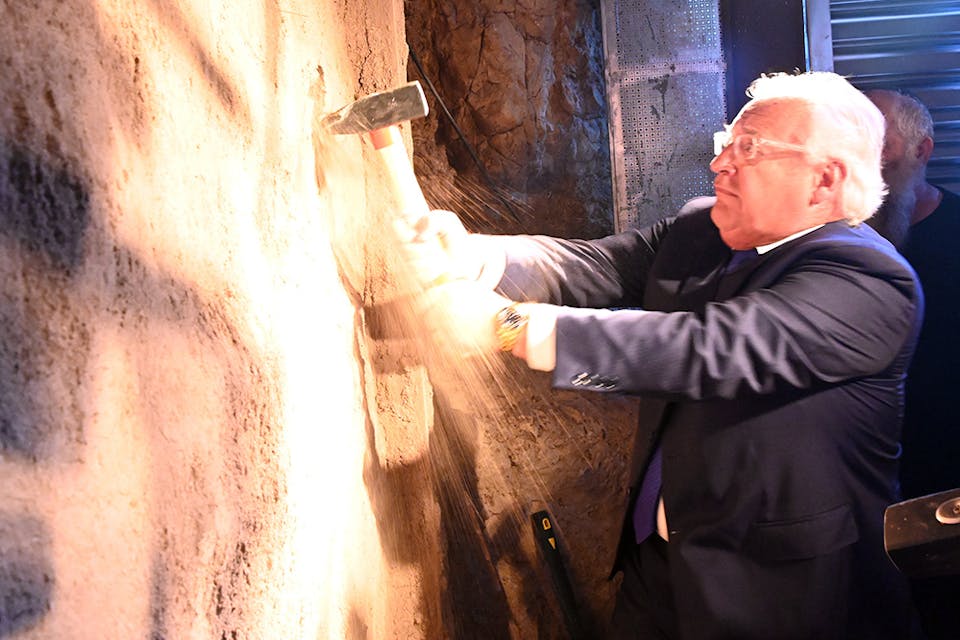
It was a striking sight: David Friedman, the U.S. ambassador to Israel, wielding a sledgehammer at an archaeological site in Jerusalem. But his presence there was about more than a unique photo-op. It began 15 years ago, when construction workers repairing a burst sewage pipe discovered an ancient staircase directly south of the Temple Mount. The steps closely matched stairs abutting the original ancient entryways of the temple complex. Archaeologists realized that the sets of stairs were linked. They had chanced upon a road leading to the temple. After years of excavations, members of the public soon will be able to walk the Pilgrimage Road.
Two thousand years ago Jews traversed this path as they came from around the world to visit the temple. Such pilgrims were obeying a biblical commandment. Deuteronomy obligated Israelites to stand in the presence of God three times a year: Passover, Pentecost and Tabernacles. Rabbinic texts abound with descriptions of the processions that occurred, and the road parallels these details in an exquisite way.
One large stone on the side of the thoroughfare, which seems to have no structural purpose, may be explained by an ancient Talmudic reference to a “stone of claims.” This was an ancient form of a “lost and found,” upon which one who had dropped an object amid the throngs of pilgrims would stand and shout to Jerusalem’s visitors. The stone reminds visitors that the entire site was once hidden and now uncovered, just as the city of Jerusalem was once lost to the Jewish people and is now returned.