

October 13, 2015
Mastering Hebrew and Ḥutzpah at Camp Massad
Memories of my 1950s summers at America's first all-Hebrew sleepaway camp.
“The man just lacks hoozpoh.” That’s how I heard a Boston dowager explain why she wouldn’t support an otherwise qualified candidate for political office. Her charmingly mangled rendition of ḥutzpah was thoroughly in tune with Anglo-American usage, accented on the first syllable (ḥutzpah) in the Yiddish/Ashkenazi manner and carrying the positive connotation of an endearing audacity, a disarming brashness. Leo Rosten in The Joys of Yiddish (1968) offers the apocryphal example of this character trait: the young man convicted of murdering his parents who petitions for leniency on the grounds that he’s an orphan.
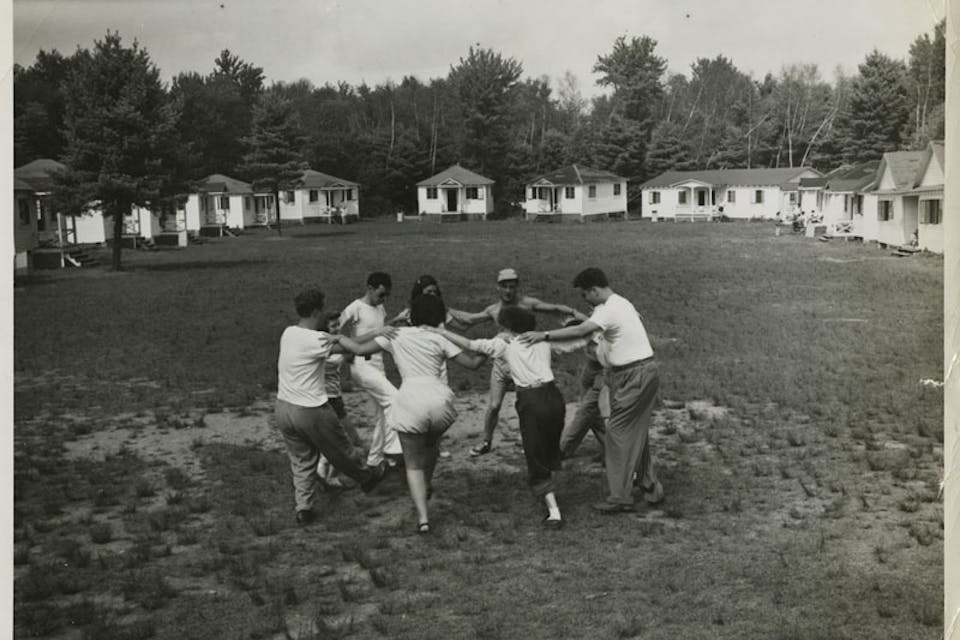
In my youthful experience, however, the word did not amuse. In the purist precincts of Massad, the Hebrew-speaking summer camp I attended for five seasons in the 1950s, it was accented, as in standard modern Hebrew, on the second syllable—ḥutzpah—and the “pah” was spat out accusatorily, condemning some instance of unmitigated gall or intolerable effrontery.
Founded in the early 1940s under the aegis of the Histadrut Ivrit of America, an organization devoted to encouraging knowledge of Hebrew language and culture, Massad was the first “sleepaway” camp of its kind in North America. Located in Tannersville, Pennsylvania, it was conceived and run by Shlomo Shulsinger, an ardent Hebraist. It became Massad Alef (1) when Massad Bet (2) was added in 1948.