
April 2, 2003
How Soloveitchik Saw Interreligious Dialogue
On the potential benefits and necessary boundaries of interfaith dialogue.
In September 2000, a Baltimore-based institute for interfaith dialogue issued a statement titled “Dabru Emet: A Jewish Statement on Christians and Christianity.” The statement enumerated a series of theological beliefs shared by Jews and Christians, and insisted that such a statement was essential given the dramatic change during the last four decades in Christian attitudes toward Judaism. Signed by over 170 rabbis and Jewish studies professors, “Dabru Emet” — Hebrew for “speak the truth” — received much publicity in the media and was published as an ad in The New York Times. One feature of the statement, however, went largely unnoticed: While “Dabru Emet” had numerous rabbinical signatories, it had a paucity of Orthodox ones.
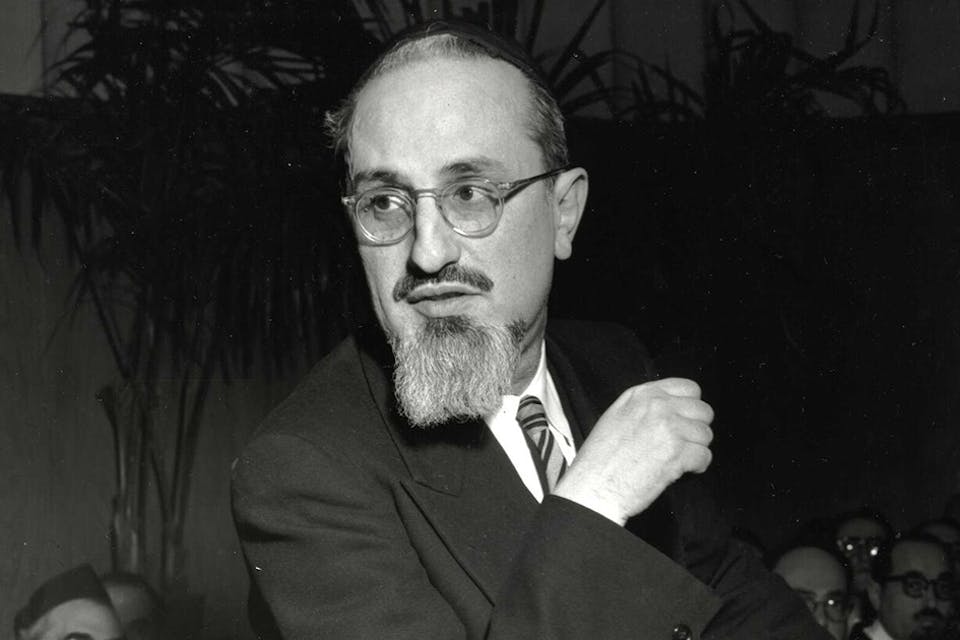
The reluctance of Orthodox rabbis, even those rabbis who have a history of communication with the Christian community, to sign the declaration reflects a strict adherence to the admonitions of the revered Rabbi Joseph Soloveitchik, known by his students and followers as “the Rav,” who in the 1960s prohibited theological dialogue with the Catholic Church. With the 10th anniversary of the Rav’s passing being widely commemorated this Passover, reflection is warranted on the limits that the Rav’s prohibition still places on Orthodox Jews today — as well as on opportunities for dialogue yet to come.
The Rav’s opposition to communal, and organizational interfaith dialogue was partly predicated upon the prediction that in our search for common ground — a shared theological language — Jews and Christians might each sacrifice our insistence on the absolute and exclusive truth of our respective faiths, blurring the deep divide between our respective dogmas. In an essay titled “Confrontation,” Rabbi Soloveitchik argued that a community’s faith is an intimate, and often incommunicable affair. Furthermore, a faith by definition insists “that its system of dogmas, doctrines and values is best fitted for the attainment of the ultimate good.” In his essay, the Rav warned that sacrificing the exclusive nature of religious truth in the name of dialogue would help neither Jews nor Christians. Any “equalization of dogmatic certitudes, and waiving of eschatological claims, spell the end of the vibrant and great faith experiences of any religious community,” he wrote.