
December 13, 2022
Look On Our Works, Ye Mighty
How Percy Bysshe Shelley’s “Ozymandias” is an oddly perfect Hanukkah poem.
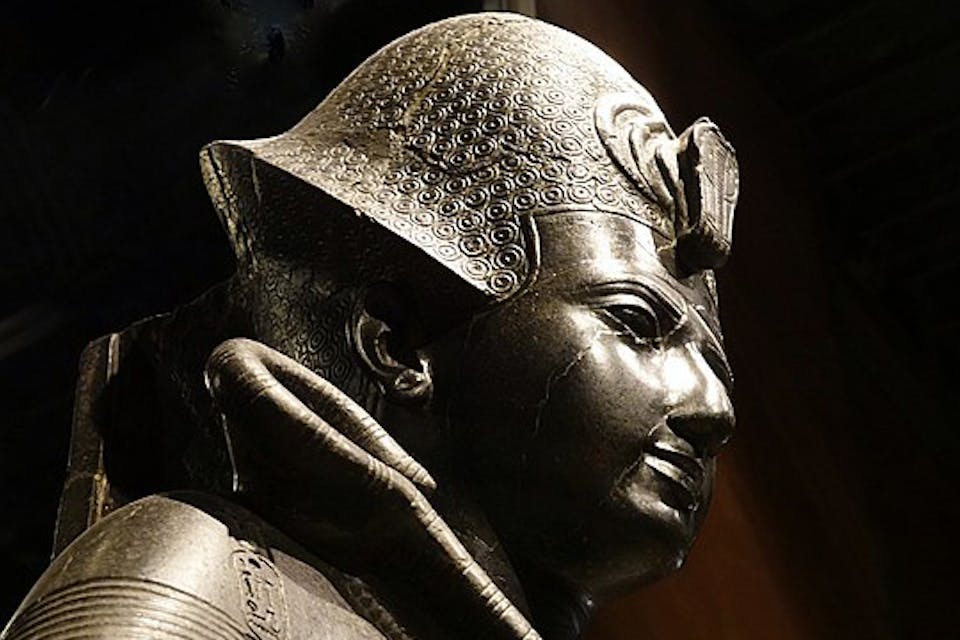
Two centuries ago, Percy Bysshe Shelley challenged his friend Horace Smith to a 19th-century version of a poetry slam. He had read of the acquisition by the British Museum of the torso of Pharaoh Rameses the Second, known in Greek as Ozymandias, and suggested that both he and Smith write poems about this new exhibit. What Shelley composed became one of the most famous poems in the English language, a reflection on finitude and the limits of power. It describes the bust of a tyrant on a pedestal bearing a proud proclamation:
“My name is Ozymandias, king of kings:
Look on my works, ye mighty, and despair!”
Nothing beside remains: round the decay
Of that colossal wreck, boundless and bare,
The lone and level sands stretch far away.
What is less well known is that after composing this poem, Shelley would come upon another Ozymandian image, one that would inspire him to consider in two brief works of prose the mysterious endurance of the Jewish people. In 1819, Shelley traveled to Italy and was suddenly inspired by his visit to the Arch of Titus in Rome, with its depiction of Jerusalem’s despoiling by the emperor Titus, embodied by the image of the menorah held aloft in a triumphant Roman parade. Soon after, and not long before he drowned on the Italian coast, he wrote down his thoughts, in two “orations,” about the Jewish people. The Shelley scholar Nora Crook notes that there is “nothing quite like them in Shelley’s oeuvre,” as both are compositions “in which Shelley speaks in the person of an imagined contemporary Jew to fellow Jews.”