
October 1, 2017
One Brief Kaddish, Summer 2017
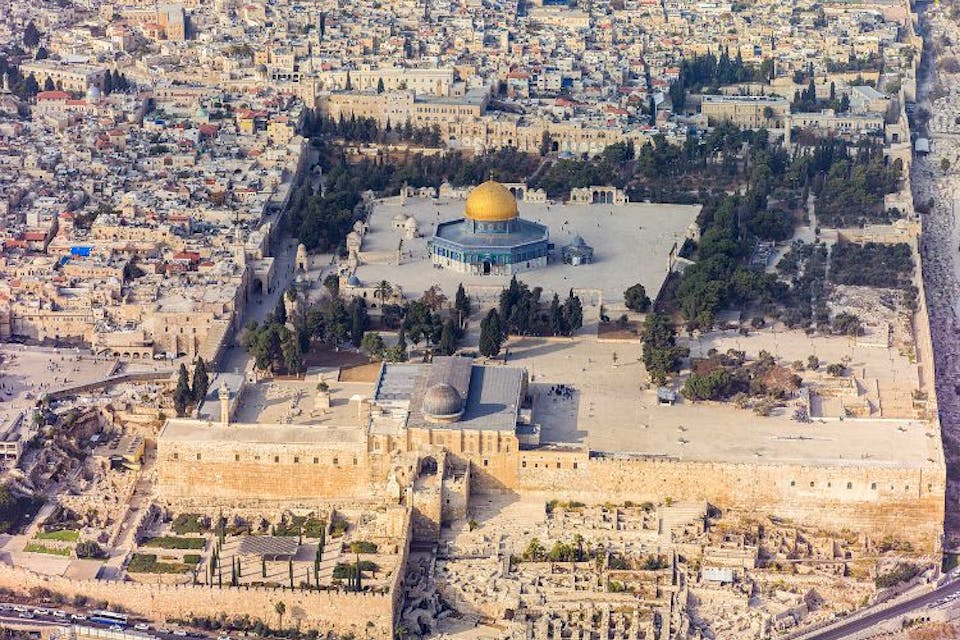
It’s rightly becoming more and more mainstream for Jews to ascend the Temple Mount.
And the priests and the people who stood in the Temple courtyard, when they heard the great and awe-inspiring Name, emerging from the mouth of the High Priest, in sanctity and purity, would all fall on their faces, confess, and proclaim, Blessed be His Sovereign Name for all eternity.
Har Habayit Beyadeinu! The Temple Mount is in our hands!
On Jerusalem Day 2017, the streets of Israel’s capital were thronging with students from religious Zionist schools, proudly parading from the new city into the old, celebrating 50 years of the sacred city’s unification. But the most interesting crowd of all assembled on Jerusalem’s Temple Mount: the more than 1,000 Jews who ascended to visit the site, more than twice as many as on any Jerusalem Day in the 50 years prior. These religious Zionists were marking the anniversary of the State of Israel’s greatest achievement—and its most tragic mistake. Whereas Israel could have acted, in the aftermath of the Six-Day War, to preserve both Muslim and Jewish rights to pray on the Mount, Moshe Dayan immediately returned the Mount—the locus of Jewish aspirations—to the Jordanian religious organization called the Waqf. The Waqf enforced a ban on Jewish prayer at the site, and engaged in wanton destruction of any evidence of the Temple that had once been there. Religious Zionists must therefore grapple with the fact that today, the only religious group without the freedom to pray at its most sacred site in the Jewish state are the Jews. Even more stunning is the fact that even as Jerusalem has been rebuilt, as the prophets predicted, the destruction of the Temple remnants has continued apace.