
May 1, 2020
Sermons in Solitude: Jews of Faith are Never Alone
COVID-19 may have kept Jews apart, but they’re never alone.
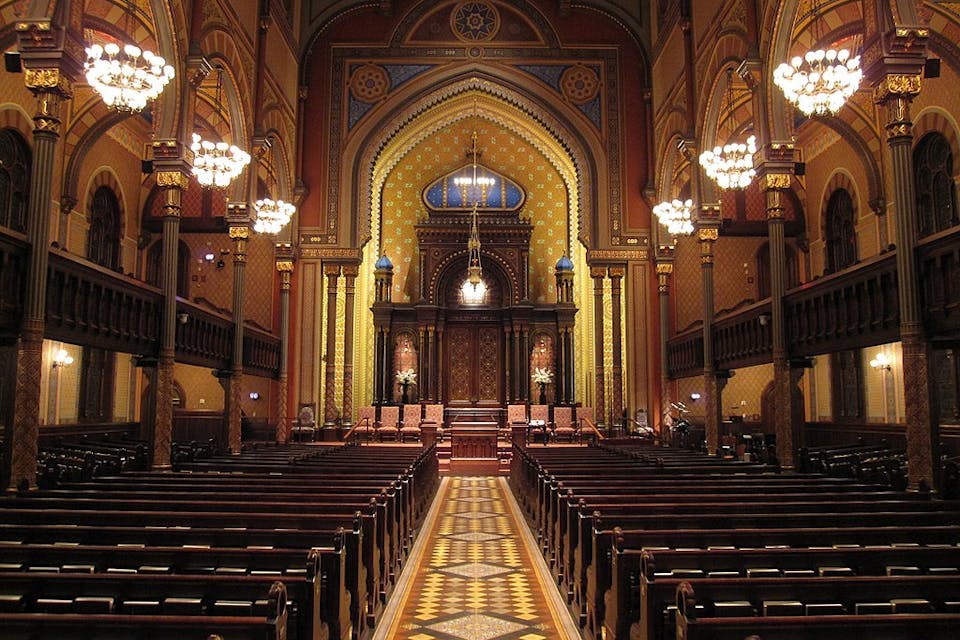
On Thursday, March 13, my synagogue, Congregation Shearith Israel in New York City, announced it would not be holding services on Shabbat. To refrain from praying in a community is a traumatic moment for any house of worship. But for my community, the suspension of our communal Sabbath prayer due to the pandemic echoed down through history. Shearith Israel is the oldest Jewish congregation in America; tracing its origins to 23 souls that had landed in New Amsterdam, with a public synagogue first built in 1730, its members had joined one another in sanctifying the Sabbath for centuries. The last time Shearith Israel’s sanctuary had been abandoned by its congregants was 1776, when the patriot members of the congregation had fled in advance of the British taking Manhattan. But the very same Jews formed a minyan in Philadelphia, and the public rituals continued apace.
Now, however, it was the minyan itself that had been rendered impossible.
I delivered a sermon on Friday afternoon—by conference call. What, I asked, does it mean to be joined, as a Jew, to others, precisely when we are forbidden from engaging with others? In my words to my community, I noted that on the Internet, many had been mentioning breakthroughs achieved by men of genius in solitude to suggest that forced aloneness might have unexpected advantages. After all, the argument went, Isaac Newton discovered the rules of calculus while in quarantine. But what interested me more, I said, was what I had learned about another insight achieved by Newton while in a period of solitude created by a plague: his conceptualization of gravity. A student described Newton’s eureka moment: