

January 15, 2026
A Century of Rewarding Palestinian Terror
For almost 100 years, appeasement of Arab violence has paid bloody dividends. The lesson has yet to sink in.
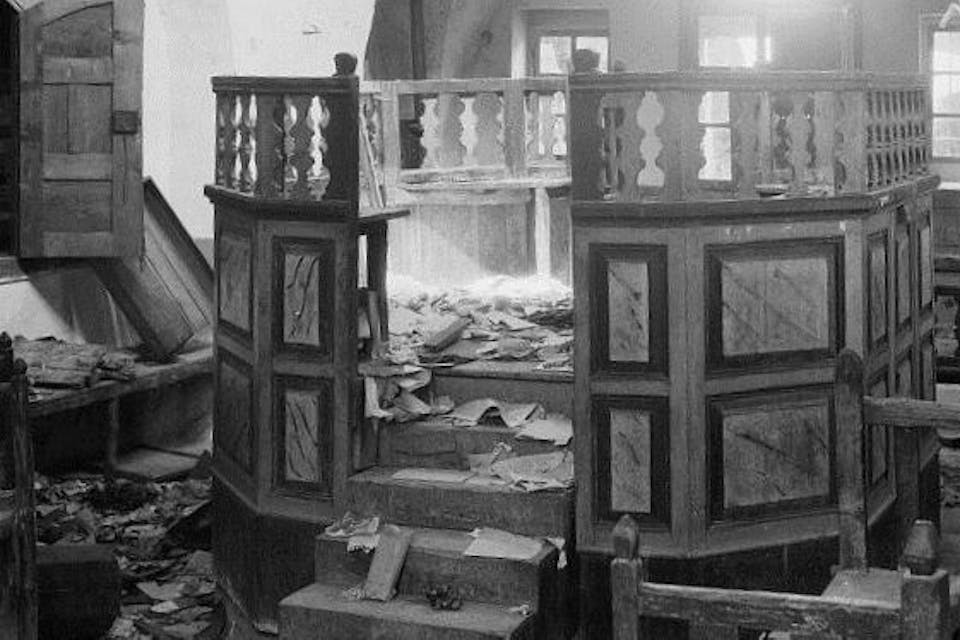
Hamas’s October 7 atrocities were innovative—for instance, the attackers livestreamed their actions with Go-Pro cameras—but they also fit an old pattern known to those familiar with the region’s history. Hamas said it was defending Jerusalem’s al-Aqsa Mosque, and named its attack “al-Aqsa Flood.” In the 1929 Hebron massacre in British Mandate Palestine, the Arab rioters, who killed nearly 70 Jews, likewise screamed that they were defending al-Aqsa, which brings to mind Faulkner’s aphorism, “The past is never dead. It’s not even past.”
This parallel is not mere coincidence, and shows something besides the impressive consistency of anti-Zionist propaganda over the past century. Linking the two episodes is the killers’ sense that massacres of civilians are politically beneficial. If one fails to acknowledge that political calculation, it is impossible to understand either the terrorists’ motivations or how best to counteract them.
In 1929, British officials responded to the bloodbath with pro-Arab policy initiatives, much as present-day governments in Britain and elsewhere have responded to the war launched by Hamas on October 7, 2023 by recognizing a Palestinian state. History shows that those initiatives in 1929 were a huge mistake. They produced ugly, long-lasting effects on Palestinian Arab political culture. Indeed, the 2023 attack can reasonably be seen as a result—a distant but direct reverberation—of the errors those officials made by rushing, in effect, to reward savagery.