

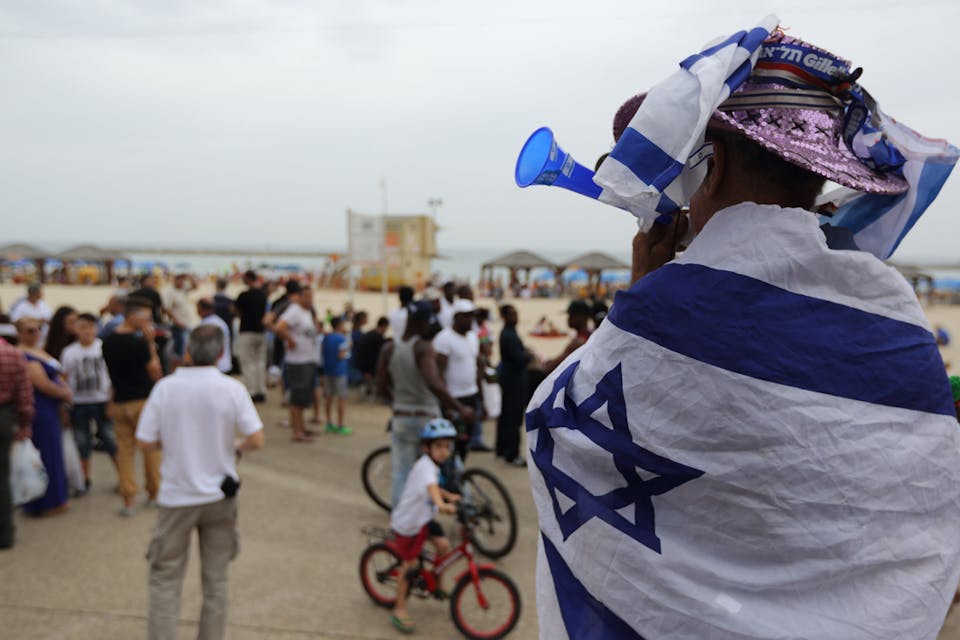
May 11, 2016
Praising the Lord on Israel’s Independence Day: Yes or No?
The answer comes down to the nature of deliverance, and to what you think the Jewish state represents.
One of the most persistent controversies within Orthodox Judaism today concerns the question of whether to say the prayer known as Hallel on Yom Ha-Atsma’ut, Israel’s Independence Day (which this year falls tomorrow, May 12)—and if so, whether the prayer should begin with the blessing that traditionally accompanies it. This dispute is generally understood as being over whether one opposes or embraces Zionism, but I’d like to suggest that it’s about much more than that.
First, a bit about the prayer itself.
In the Talmud, the term Hallel—which simply means “praise!” and is the root of the word Hallelujah—can refer to any of three prayers, all of which are biblical texts. First there is the everyday Hallel, sung by the Levites in the Temple and found in 1 Chronicles 16. It is preserved in the opening section of the morning prayer. Then there is the “Great Hallel,” Psalm 136, which, the Talmud tells us, the Levites sang on very special occasions such as the inauguration of Solomon’s Temple. And finally there is the “Egyptian Hallel,” so called because it includes the line “when Israel left Egypt” and was instituted by the Great Assembly or, depending on whom you believe, earlier by the prophet Samuel and King David, for the people “to say when they are delivered” (Tractate P’saḥim). Consisting of Psalms 113-118, it is today simply referred to as Hallel and is the subject of the Independence Day controversy.