Israel-Turkey relations, already marked by unprecedented tensions, entered yet another period of extraordinary friction following an Israeli Air Force (IAF) strike on the Abu al-Duhur Air Base in Syria’s northwestern Idlib province on August 18. In an official statement issued after the strike, the Israeli Prime Minister’s Office for the first time explicitly characterized Turkey’s military deployment in Syria as a threat. In other words, Jerusalem made clear that it views any redeployment of Turkish Armed Forces units within Syria that could alter the existing balance of power—as well as the deployment of Turkish air-defense systems on Syrian territory—as potentially constraining the IAF’s air superiority and freedom of action in Syrian airspace. Of particular concern to the IAF is the possibility that future Israeli airstrikes against Iran could be detected in advance, allowing Tehran to be alerted or even leading to attempts to intercept or otherwise impede Israeli aircraft.
Determined to avoid turning Ankara into an active adversary, the IAF was careful to conduct the strike before Turkish forces could establish a presence at the base. Moreover, Israel only acted after its message urging Syria not to allow Turkey to deploy its forces at the base went unheeded. The strike on Abu al-Duhur was a surgical operation without casualties that succeeded, at least for the time being, in preserving the status quo. Yet, despite these attempts to avoid confrontation, official statements from both sides have now made one thing unmistakably clear: Israel and Turkey increasingly view each other as threats to their respective national interests.
Behind the strike on Abu al-Duhur is a profound shift in Israeli perceptions of Turkey, due to Turkey’s increasingly antagonistic posture and, above all, its support for Hamas. A growing number of prominent Israeli figures, including the former prime minister Naftali Bennett, have not hesitated to describe Turkey as the “new Iran.”
Israel-Turkey relations, already marked by unprecedented tensions, entered yet another period of extraordinary friction following an Israeli Air Force (IAF) strike on the Abu al-Duhur Air Base in Syria’s northwestern Idlib province on August 18. In an official statement issued after the strike, the Israeli Prime Minister’s Office for the first time explicitly characterized Turkey’s military deployment in Syria as a threat. In other words, Jerusalem made clear that it views any redeployment of Turkish Armed Forces units within Syria that could alter the existing balance of power—as well as the deployment of Turkish air-defense systems on Syrian territory—as potentially constraining the IAF’s air superiority and freedom of action in Syrian airspace. Of particular concern to the IAF is the possibility that future Israeli airstrikes against Iran could be detected in advance, allowing Tehran to be alerted or even leading to attempts to intercept or otherwise impede Israeli aircraft.
Determined to avoid turning Ankara into an active adversary, the IAF was careful to conduct the strike before Turkish forces could establish a presence at the base. Moreover, Israel only acted after its message urging Syria not to allow Turkey to deploy its forces at the base went unheeded. The strike on Abu al-Duhur was a surgical operation without casualties that succeeded, at least for the time being, in preserving the status quo. Yet, despite these attempts to avoid confrontation, official statements from both sides have now made one thing unmistakably clear: Israel and Turkey increasingly view each other as threats to their respective national interests.
Behind the strike on Abu al-Duhur is a profound shift in Israeli perceptions of Turkey, due to Turkey’s increasingly antagonistic posture and, above all, its support for Hamas. A growing number of prominent Israeli figures, including the former prime minister Naftali Bennett, have not hesitated to describe Turkey as the “new Iran.”
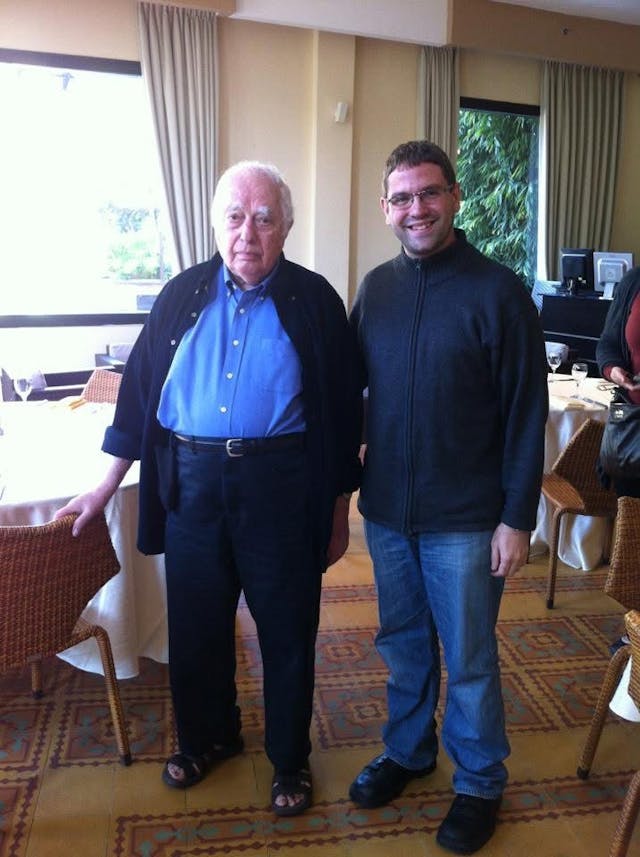
As an academic who was born and raised in Turkey and now lives in Israel, the idea that my native country could be the main source of existential threats to my adopted one is a nightmare scenario.Yet I first heard the idea mooted many years before it entered the public debate. It came from the late Professor Bernard Lewis, one of the most eminent historians of the Middle East, during his visit to Tel Aviv University on January 3, 2012.
As chance would have it, I found myself in the right place at the right time. At a luncheon held in Lewis’s honor, I had the privilege of sitting next to him, and we spent much of the meal conversing in Turkish. The principal subject of our conversation was the deterioration in Israel–Turkey relations, which had begun with the infamous 2009 confrontation in Davos between Recep Tayyip Erdoğan, then the Turkish prime minister, and Israel’s then-president Shimon Peres, and had come to a head in 2010 when the Israel Defense Forces (IDF) stopped the Mavi Marmara, a Turkish vessel, from trying to run the blockade of Gaza. It was during that conversation that Professor Lewis shared a prediction that has haunted me throughout my career:
Son, I will most likely not live to see those days, but you very well may. From the perspective of Israel’s national security, Turkey and Iran could one day reverse roles. Growing secularism in Iran may eventually bring down the anti-Israel regime of the ayatollahs and replace it with a government that seeks an alliance with Israel. Turkey, meanwhile, could move in the opposite direction. Growing conservatism and political Islam could, over the years, gradually transform it into a country that regards Israel as an enemy.
At the time, as a young scholar who had witnessed firsthand the special bond between the Turkish and Jewish peoples, the prospect of active enmity envisioned by Lewis seemed almost inconceivable to me. Despite the differences and recurring tensions between the two countries, I chose to believe that these would in time dissipate, reassuring myself that they had never reached a formal declaration of hostility. I therefore rejected his prediction almost instinctively and respectfully told him so.
The author, with Bernard Lewis
Today, however, the trajectory of events—particularly since Hamas’s October 7, 2023 attack on Israel—makes it increasingly difficult for me to dismiss Lewis’s prediction as readily as I once did. His words were lent greater weight by the statement of Turkish foreign minister, Hakan Fidan, in Cairo on October 14, 2023. Referring explicitly to Turkey’s role as a guarantor power in Cyprus, Fidan expressed Ankara’s willingness to become directly involved in the Israel–Palestinian conflict under a similar guarantorship formula designed to protect Palestinian interests. In practice, such a proposal suggests that if Israel were deemed to have violated the status quo established by a future peace agreement, Ankara could reserve the right to use military force to defend the Palestinians. Although Turkey has sought to frame this proposal in the language of peace and present itself to the international community as a constructive actor, the view from Jerusalem is markedly different.
Several developments bolster this view: Turkey’s emergence as a safe haven for Hamas members, its campaign to delegitimize Israel, and, particularly since the fall of the Assad regime in December 2024, its growing influence over the new government in Damascus. Against this backdrop, it would be fair to say that perceptions of Turkey in Jerusalem have increasingly begun to resemble the scenario Lewis envisioned.
Following the Turkish parliament’s closed-door “Israel session” in October 2024, reports leaked to the press indicated that Ankara had come to regard Israel as a “national threat” to Turkey. This shift in Ankara’s threat perception prompted significant changes in Israel’s own strategic thinking. In January 2025, a commission headed by the former National Security Council chief, Jacob Nagel, tasked by the Israeli government with drafting recommendations for the future development of the IDF, published its report. In light of Ankara’s increasingly antagonistic posture toward the Jewish state, the report placed Turkey in the category of a “rival state with the potential to become an enemy state.”
Despite this increasingly hostile atmosphere, however, Israel and Turkey have yet to sever the ties that have formally bound them since 1949. The diplomatic relationship established through mutual recognition—without the need for a peace treaty—remains intact on paper, as do official channels of communication and diplomatic missions in both countries. Equally significant, both Ankara and Jerusalem have thus far refrained from formally declaring the other an enemy.
The 2022 Normalization That Wasn’t
Given all this bad news, it is worth recalling just how different the picture looked only four years ago. Following the Israeli president Isaac Herzog’s historic visit to Ankara in March 2022, at the invitation of Turkish President Recep Tayyip Erdoğan, I wrote an article for Mosaic titled “Can a Renewed Alliance between Israel and Turkey Stabilize the Middle East?” I still remember vividly the optimism with which I wrote those lines.
The present essay is, in many respects, a continuation of the one I wrote four years ago. Needless to say, the political landscape in 2022 was dramatically different. It was before the October 7 attack on Israel, which set in motion tectonic changes across the Middle East; before the overthrow of the Syrian dictator Bashar al-Assad in December 2024; and before the two wars between Israel and Iran.
At the time, largely because of the momentum generated by the Abraham Accords, the central question confronting the Middle East was how to build a more peaceful and prosperous regional order. Countries across the region, most notably Saudi Arabia, were openly signaling their willingness to normalize relations with Israel. It seemed that the pursuit of broader Middle Eastern peace could finally be decoupled from the Israel–Palestinian conflict. The Negev Summit of March 2022, which brought together Israel, the United States, the United Arab Emirates, Bahrain, Morocco, and Egypt with Saudi Arabia’s behind-the-scenes support and approval, and the Israel–Turkey normalization announced in Ankara that same month, were among the most important catalysts of this new atmosphere of regional reconciliation.
In the specific context of Israel–Turkey relations, Israel’s response to the devastating February 6, 2023 earthquakes in Turkey represented another important milestone. Israel provided extensive humanitarian assistance and deployed a large-scale search-and-rescue mission that played an active role in rescuing survivors trapped beneath the rubble. In terms of both personnel and humanitarian aid sent to help the victims, Israel ranked second only to Azerbaijan, a country Turkey regards as its “sister state.” Even more significant was the fact that Israel’s efforts during the disaster were widely recognized and openly appreciated by the Turkish public. At the time, this outpouring of public goodwill was regarded as a historic opportunity to strengthen the still-fragile relationship between the two countries.
This positive political momentum reached its peak in September 2023. During an interview with Israel’s i24NEWS, Hikmet Hajiyev, assistant to the president of Azerbaijan and head of the Foreign Policy Affairs Department of the Presidential Administration, openly floated the possibility of establishing a “triangular alliance” among Azerbaijan, Israel, and Turkey. Roughly a week later, Prime Minister Benjamin Netanyahu met President Erdoğan at the Turkish House, Turkey’s diplomatic mission located directly across from the United Nations headquarters in New York.
The images of the two leaders together seem almost like science fiction from today’s vantage point, or perhaps, like something generated by AI. Their discussions focused particularly on opportunities for cooperation in energy and tourism. According to reports at the time, Netanyahu was expected to visit Ankara, to be followed in the near future by Erdoğan’s second visit to Israel, after his first in 2005.
This positive trajectory, however, stood in direct opposition to the regional vision of Iran’s “Axis of Resistance,” which includes Hamas, Lebanese Hizballah, the Yemenite Houthis, and the Hashd al-Shaabi and other Iraqi Shiite militias. Rather than the emerging prospect of regional peace, the axis offered vision of a continuous conflict.
Seen from this perspective, the October 7 attacks, the darkest day in Jewish history since the Holocaust, marked a decisive rupture. In the aftermath, the members of the axis of resistance actively joined the war in support of Hamas, attacking Israel from Lebanon, Iraq, and Yemen with rockets, drones, and even ballistic missiles. Their direct involvement transformed what began in the western Negev into a regional war.
The scale and sophistication of Hamas’s terror assault demonstrated that it could no longer be treated as an ordinary security concern. The abduction of Israeli civilians from their homes, the disruption of economic activity due to sustained rocket fire on the greater Tel Aviv area, and the successive cancellation of flights at Ben Gurion Airport made clear that Hamas had become an intolerable strategic—and potentially existential—threat. From Jerusalem’s perspective, these developments left little alternative but to embark on an all-out campaign against the broader axis.
After October 7: Legitimizing Hamas, De-legitimizing Israel
On October 7, the Turkish Foreign Ministry issued Statement No. 247. Avoiding any explicit condemnation of Hamas, Ankara expressed concern over the “violence” and “tension” and strongly condemned the resulting “civilian casualties,” without specifically referring to the Israeli civilians who had been targeted. Despite Hamas’s violation of Israeli sovereignty and the immense human and physical devastation inflicted by the attack, the ministry called on the parties to act with restraint and reiterated the need to pursue a “two-state solution.”
Against the backdrop of the encouraging images that had accompanied the Israel–Turkey normalization process, and particularly the close cooperation demonstrated during the February 2023 earthquakes, Ankara’s deliberate indifference came as a grave disappointment in Israel. The Foreign Ministry’s statement was issued before Israel had even begun its military response against Hamas, at a time when Israeli forces were still fighting to repel Hamas militants who had infiltrated Israeli territory.
In retrospect, during the first days of the war, Turkey appeared to be treating the conflict as yet another round of the limited military confrontations that had periodically taken place in Gaza between 2008 and 2023. But only a few weeks after the conflict began, as it became clear that something different was happening, Turkey took an unprecedented step: it suspended all direct flights between Istanbul and Tel Aviv, severing one of the most important links underpinning people-to-people relations between the two countries. This was one of the first indications that the war triggered by October 7 would have far greater consequences for Israel–Turkey relations than previous confrontations in Gaza had done.
October 25, 2023 marked a critical turning point. Addressing the parliamentary group of his ruling Justice and Development Party (AKP), Erdoğan declared that Hamas was not a terrorist organization, but rather a group of “freedom fighters.” Erdoğan understood quite well that this statement would deal a major blow to Israel–Turkey relations. From that day on, Ankara has legitimized Hamas. Senior Turkish officials, including Erdoğan, his foreign minister Hakan Fidan, and his intelligence chief İbrahim Kalın, have since held frequent meetings with Hamas leaders, receiving them in the capital with a level of ceremony and public visibility normally granted official delegations from foreign countries. Besides poking a finger in Israel’s eye, Turkey’s portrayal of Hamas as a legitimate political actor making significant sacrifices for the Palestinian cause indirectly undermined the standing of the Palestinian Authority under Mahmoud Abbas, which recognizes Israel’s political existence and has refrained from direct armed confrontation.
Erdoğan did not stop there. On October 28, at the “Great Palestine Rally” held on the grounds of Istanbul’s former Atatürk Airport, which pro-government media outlets claimed drew approximately 1.5 million participants, Erdoğan appeared wearing a scarf bearing the Turkish and Palestine Liberation Organization flags alongside a keffiyeh pattern. Before the massive crowd, he threatened to declare Israel a war criminal before the entire world. Three days prior, he had inaugurated his campaign to legitimize Hamas; now he signaled the beginning of a coordinated campaign to delegitimize Israel.
In the same speech, Erdoğan made another rhetorical move of perhaps even greater significance: he accused Israel (without any concrete evidence) of providing financial and military support to the Kurdish PKK. To Turks, this is the equivalent of what an accusation of support for Hamas would be to Israelis, or of support for al-Qaeda to Americans. It was the opening salvo in a broader effort to instill in the Turkish public a perception of Israel as a direct threat to Turkey’s wellbeing.
A few weeks later, Erdoğan took this narrative a step further, suggesting that Israel’s military operations in Gaza could eventually evolve into a broader regional strategy of occupation that might eventually reach Turkey’s own borders. Erdoğan contended that Israeli policy was motivated by a religious belief that the biblical “promised land” encompasses parts of Turkey and other neighboring countries. He thus shifted his rhetoric from the defense of the Palestinians or protection of Islamic holy sites to one about immediate Turkish national-security interests.
Soon both pro-government outlets and ostensibly independent mainstream media organizations began echoing the president’s demonization of the Jewish state. Israel was repeatedly described with labels such as “terrorist state,” “rogue state,” and “virus,” while Benjamin Netanyahu was branded a “genocidaire,” “Hitler,” a “murderer,” and a “gangster.” Turkish newspapers also began throwing around such neologisms as “Gazaschwitz” (equating Gaza to Auschwitz) and “Zio-Nazi camps.” With this campaign, the organized slaughter of six million Jews across Europe, who posed no threat to German security, was equated with the war initiated by Hamas against Israel. Such rhetoric served simultaneously to trivialize the Holocaust and to demonize Israel as the latter-day Nazi Germany. Palestinians, meanwhile, were implicitly cast in the role of European Jews between 1938 and 1945, in order to undermine the historical and moral significance of the Holocaust for the establishment of the state of Israel.
Even more significantly, Erdoğan added a religious dimension to his denunciations of Israel. At a rally in Kayseri on March 21, 2024, he declared: “We entrust that person called Netanyahu to our Lord through His name al-Qahhar. May our Lord utterly destroy him.” The invocation of al-Qahhar, “The Subduer” or “The Vanquisher,” in a sermon-like speech directed at Israel further hardened public attitudes toward the country and made them increasingly difficult to reverse.
At first, Erdoğan seemed content to direct such imprecations solely at the Israeli prime minister. But a year later—addressing worshippers following the Eid prayer at Istanbul’s Grand Çamlıca Mosque—he again spoke of al-Qahhar, this time calling down divine wrath on Israel as a whole. The theme was subsequently echoed, and then formally adopted, by the Presidency of Religious Affairs, or Diyanet, the state institution responsible for administering Sunni Islam in Turkey.
In a sermon dated July 25, 2025, distributed by Diyanet for delivery in mosques across the country following Friday prayers, Israel was identified with the Ashab al-Ukhdud, or the “People of the Ditch,” a Quranic reference to persecutors who burned believers in fire-filled trenches for refusing to renounce their faith. Through this analogy, Israel was effectively portrayed as a religious enemy of Muslims. The sermon went so far as to invoke Quran 8:60, calling on the Turkish public to “prepare against their enemies whatever force they are able to muster.”
The religious rhetoric would become more pointed still. On September 28, 2025, once again speaking about Israel at Istanbul’s Grand Çamlıca Mosque, Erdoğan declared: “Our Lord, Allah, commands us to engage in jihad in His cause. May He make us instrumental in the awakening and unity of the Islamic world.” The words require no interpretation.
From Rhetoric to Economic and Legal Warfare
Of course, it is one thing to speak of jihad against Israel, and another thing altogether to go to war. Official Turkish condemnations of the Jewish state have been frequent since 2009, even if they never reached the viciousness of the ones that followed the October 7 attacks. While diplomatic relations between Turkey and Israel have ebbed and flowed, trade has continued. Even the Mavi Marmara crisis, one of the lowest points in bilateral relations, did not shake the economic interdependence between the two countries. No longer.
On April 8, 2024, one month after the first al-Qahar speech, Ankara unilaterally restricted exports to Israel of 54 categories of goods, including steel and cement, products with both civilian and potential military applications. It went considerably further on May 2, when it announced a complete suspension of trade with Israel. Turkey thus walked away from approximately $9.5 billion in bilateral commerce, despite enjoying a favorable trade balance—effectively subordinating its economic interests to an ideological foreign policy.
Israeli and Turkish businesspeople, however, soon devised creative ways to circumvent the restrictions, most notably by routing Turkish goods destined for the Israeli market through the Palestinian Authority. Turkish exports to the Palestinian Authority surged by an extraordinary 1,180 percent in August 2024, reaching a historic high. As these figures became public and generated criticism, particularly from Erdoğan’s Islamist political opponents, his government moved to close this loophole and further tighten the sanctions regime.
On August 21, 2025, Israeli-flagged vessels were barred from docking at Turkish ports, while Turkish-flagged vessels were prohibited from calling at Israeli ports. Still, bilateral commerce did not disappear altogether. It continues, albeit on a considerably smaller scale, through vessels sailing under third-country flags and via ports in third countries.
Turkey also struck at Israel through the mechanism of international law. On August 7, 2024, it filed a declaration of intervention in South Africa’s genocide case against Israel before the International Court of Justice (ICJ). Nor did the cease-fire that went into effect on October 10, 2025 reduce tensions. Instead, on November 7, 2025, Turkey issued arrest warrants for 37 Israeli officials, including Benjamin Netanyahu, Defense Minister Israel Katz, and the IDF chief of staff Eyal Zamir.
Ankara didn’t confine its lawfare to senior officials. The Turkish parliament introduced a bill targeting dual Israeli-Turkish citizens over their compulsory service in the IDF (considered prima-facie evidence of criminality). The bill passed its first parliamentary vote and, although it still awaits further consideration, its introduction was accompanied by the unprecedented persectuion of dual nationals.
Several social-media platforms dedicated to targeting Israeli-Turkish dual citizens began identifying and publicly exposing those who had served in the IDF and threatening them with legal action in Turkey. In February 2026, an Israeli-Turkish dual citizen visiting Istanbul was detained by Turkish security forces after her name and pictures of her in her IDF uniform had been circulated by one such social-media campaign. The detention was particularly striking given that she had completed her military service before October 7, 2023 and had no involvement in the war in Gaza. She was subsequently released following diplomatic intervention.
The Syrian Battleground
More troubling than perfervid religious rhetoric, theatrical lawfare, or even the severing of trade might be the statement Erdoğan made on July 28, 2024 at a party event in the city of Rize: “We must be very strong so that Israel can’t do these ridiculous things to Palestine. Just like we entered Karabakh, just like we entered Libya, we might do something similar to them.” He was referring to Turkey’s intervention in the recent conflict between Azerbaijan and Armenia over the disputed territory of Nagorno-Karabakh and in the still-ongoing Libyan civil war. In both cases, Ankara refrained from directly confronting its opponents—Armenia in Nagorno-Karabakh or Khalifa Haftar’s Libyan National Army in Libya. Instead, it provided weapons, ammunition, and military expertise to the forces fighting them, namely Azerbaijan and Libya’s Government of National Accord. Applying this modus operandi to Erdoğan’s remarks suggests that Turkey could seek to avoid a direct military confrontation with Israel while providing arms and other forms of military support to the Jewish state’s adversaries.
This is where Syria comes in. Ahmed al-Sharaa, better known until recently by his nom de guerre Abu Mohammad al-Jolani, emerged victorious from the thirteen-year-long civil war in December 2024, when his militia and its allies toppled Bashar al-Assad, Iran’s longstanding ally. Since then, he has become Turkey’s most important partner in the region. Sharaa now appears in Western capitals in a suit and tie, presenting himself as a legitimate statesman. Yet his trajectory is rooted in jihadism. In 2005, he was captured by American forces while fighting for al-Qaeda in Iraq. After his release, he returned to Syria in 2011 with the backing of Abu Bakr al-Baghdadi, who would later become the leader of Islamic State (IS). There, Sharaa established Jabhat al-Nusra in 2012, which the United States subsequently designated as a terrorist organization. He was himself designated a global terrorist by the United States in 2013. In 2017, he transformed Jabhat al-Nusra into Hayat Tahrir al-Sham (HTS) in an effort to distance it from its roots in al-Qaeda. This jihadist background remains essential to understanding both Sharaa’s political evolution and the concerns surrounding his rise to power.
Turkey played a critical role in facilitating the transformation of the Sunni jihadist Jolani into the suit-and-tie-clad statesman Ahmed al-Sharaa. In the immediate aftermath of the Syrian revolution, Ankara became the first country to send senior officials to Damascus. Turkey also actively lobbied the international community to accept Sharaa, inviting him, for instance, to high-profile events such as the Antalya Diplomacy Forum.
Ankara simultaneously advocated the lifting of sanctions imposed on Syria under the Caesar Act. Meanwhile it reopened its embassy in Damascus and dispatched Nuh Yılmaz, known to have a close relationship with Foreign Minister Hakan Fidan, to serve as the new ambassador and special envoy to Syria—the latter title being the same one used by the American diplomat Tom Barrack, who is also the ambassador to Turkey.
Turkey’s diplomatic blitz proved remarkably successful, likely because it appealed to European and American interests. The reconstruction of a country devastated by years of war promised substantial commercial opportunities and potential profits, while the prospect of resettling Syrian refugees currently living in Europe offered relief from the pressures of mass migration.
The economic dimension became even more apparent after the Syrian government took control in January 2026 of oil fields previously held by the Kurdish-led Syrian Democratic Forces (SDF), which had used the civil war to establish a liberated autonomous zone in northern Syria. The following month, Chevron signed a cooperation agreement with the Syrian Petroleum Company. In short, the new Syrian government has come to serve a convergence of significant economic, political, and strategic interests for both the United States and the European Union. The U.S. decision on August 25 to remove Syria from its list of State Sponsors of Terrorism was the icing on the cake.
The new Syrian government, however, is not useful only to the West. Ankara also seeks to capitalize on the new regional order to expand its own power and influence. While many analysts wouldn’t find it accurate to describe Sharaa as a Turkish puppet, Ankara’s longstanding support for him has translated into concrete influence, and the advantages extend beyond Syria’s borders. One month after Fidan met his Jordanian counterpart in Turkey, Amman hosted a meeting on March 9, 2025 at which a new framework bringing together “Syria’s neighbors” began to take shape.
At that meeting, Turkey, Syria, Iraq, Lebanon, and Jordan agreed to establish a joint operations center focused primarily on combating Islamic State. But there was also another significant, declared objective: to reduce dependence on, and potentially limit the involvement of, any “external force,” namely the United States. Only one of Syria’s neighbors was not invited: Israel. From Jerusalem, fighting IS could be seen as providing a convenient fig leaf for a framework whose longer-term strategic implications extend well beyond counterterrorism. The members of this prospective alliance together surround Israel from the north, northeast, and east. Had the framework not been limited to Syria’s neighbors, and included Egypt, it would have encircled Israel completely.
The establishment of this incipient alliance added another layer to Ankara’s already substantial leverage over Damascus. Since 2016, Turkey has maintained a military presence in, and has exercised control over, areas of northern Syria along its border, showing no intention of withdrawing. Ankara has increasingly been able to use this continued military presence as an additional source of leverage over the new government in Damascus. It is important to note, however, that Turkey has been careful not to present this leverage in overtly coercive terms. Instead, Ankara has sought to portray itself as something closer to a “military mentor” to the new Syrian leadership.
At the same time, Turkey has endeavored to expand its sphere of influence, both within Syria and across the broader Middle East, by extending its military footprint into the center of the country and, if possible, farther south. In line with this policy, reports emerged that Ankara was planning to deploy Turkish forces to the T4 and Palmyra airbases in the central province of Homs, as well as to the main airport in Hama. Turkish delegations had reportedly conducted preliminary visits to these facilities in preparation for the possible deployment of Turkish military personnel.
Turkey’s planned move to fill the strategic vacuum left by Iran was ultimately thwarted when the Israeli Air Force struck the aforementioned sites on April 2, 2025, severely damaging their infrastructure. Through this preventive strike, Jerusalem delivered an unofficial warning to Ankara that Turkey should limit its military presence to northern Syria.
In this sense, the 2025 operation is of a piece with the August 18 strike on the Abu al-Duhur airbase mentioned at the beginning of this article. Both operations reflected the same emerging Israeli red line: preventing a Turkish military presence in Syria from expanding southward in ways that could constrain Israel’s freedom of action.
The day after the April 2 strikes, the Turkish Foreign Ministry issued an official statement portraying Israel as a destabilizing force that threatened not only Turkey but the region as a whole. Turkey’s Directorate of Communications used nearly identical language following the Abu al-Duhur attack, but went further, dismissing Israeli reports regarding a prospective Turkish deployment to the base as unfounded and accusing Netanyahu of deliberately escalating regional tensions in an effort to boost his domestic political standing ahead of Israel’s elections. But a video recorded in the area after the strike by a Syrian soldier of Turkish origin claimed that Turkish military personnel had already been present at the base prior to the attack and that their presence had been detected by Israel.
As of late August 2026, when these lines are being written, Turkish Armed Forces units have yet to enter the sites struck by Israel for the purpose of establishing a permanent military presence. This, however, does not mean that Ankara has remained passive.
Turkey continued to consolidate its role as Syria’s military mentor, gradually expanding both its military and political influence over Damascus. On August 13, 2025—after the first Israeli airstrike—the Turkish defense minister Yaşar Güler and his Syrian counterpart, Murhaf Abu Qasra, signed a memorandum of understanding providing for cooperation in military training and advisory services. The following day, the two countries further formalized their defense cooperation. The emerging framework included the transfer of Turkey’s NATO-standard military knowledge and expertise to the Damascus government, as well as the provision of military equipment, weapons systems, and logistical supplies aimed at strengthening Syria’s defense capabilities.
For Israel, the most consequential development following these agreements came on January 21, 2026, when Turkey deployed an advanced radar system at Damascus International Airport, potentially creating new constraints on Israel’s freedom of action in Syrian airspace. At this stage, however, it would be premature to conclude that the radar has materially restricted Israeli operational capabilities. During the 2026 Iran war, the Israeli Air Force continued to make use of neighboring airspace while striking strategic targets inside Iran—exactly the sort of operations Jerusalem fears the radar installations would prevent.
Turkey’s Islamic NATO and a New Encirclement of Israel
In parallel with the “Syria’s Neighbors” framework, Turkey has continued to improve its relations with Egypt. The thaw in relations between the two countries, which had been extremely chilly since 2013, began with Erdoğan’s visit to Cairo in February 2024. It acquired a new dimension with the signing of an agreement on cooperation in the field of unmanned combat aerial vehicles. In September 2024, Egypt’s President Abdel Fattah el-Sisi paid a reciprocal visit to Turkey, during which the two countries signed seventeen new memoranda of understanding aimed at expanding bilateral cooperation. Since then, a series of visits, agreements, and joint naval and aerial exercises have steadily strengthened ties between the respective militaries.
This past June, Fidan traveled to Cairo, where he met President Sisi, along with the chief diplomats of Pakistan and Saudi Arabia. They announced the establishment of a new framework known as the “Regional Four” (R4), a mechanism bearing similarities to the earlier “Syria’s Neighbors” initiative. Yeni Şafak, a newspaper closely aligned with the Erdoğan government, went so far as to portray the alliance as one explicitly directed “against Israel.” Although the two frameworks are formally independent of one another, from an Israeli perspective they can be viewed as two interlocking rings in an emerging Turkish strategy of encirclement.
This perception becomes even more consequential when Turkey’s considerable naval capabilities are taken into account. With Egypt to the south and Syria and its “neighbors” to the north and east aligning with Turkey, Israel’s only remaining flank is the Mediterranean Sea to the west. While Israel has a small but effective navy, adept at specific tasks, Turkey is a naval power with substantially superior capabilities. The two sets of alliances, seen together, appear to lend further weight to the strategic threat outlined in the Nagel report.
Throughout the summer, Turkish media repeatedly promoted both the R4 framework and the prospect of an eventual “Islamic NATO,” gradually preparing domestic public opinion for the possibility that the R4 mechanism could evolve into a more formal military alliance. That process culminated on August 7, when Saudi Arabia, Pakistan, and Turkey signed a trilateral defense agreement in Mecca. The three countries announced the establishment of a collective-defense mechanism resembling NATO’s Article 5, under which an attack against one member would be treated as an attack against all three.
However, in an effort to preserve its strategic autonomy, maintain a neutral posture as a regional mediator, and carefully balance its complex security relationships with Israel and the United Arab Emirates, Egypt refrained from signing the Mecca Joint-Defense Agreement. Turkish media outlets have nonetheless continued to speculate that Egypt will eventually join the emerging framework.
Beyond Egypt, the agreement provides Turkey with an opportunity to deepen its strategic relations with Saudi Arabia and Pakistan. Its first major test came from the Houthis in Yemen. Following a Houthi missile attack against Saudi Arabia, questions quickly emerged over whether the Mecca Agreement possessed any real teeth. Although Turkey has not launched a military response against the Houthis at the time of writing, Ankara openly announced its intention to cooperate with Saudi Arabia by joining a Red Sea coalition aimed at securing freedom of navigation through the Bab el-Mandeb Strait.
Turkey, under the banner of countering the Houthi threat, is thus preparing to extend its naval presence into the Red Sea. While such a deployment may initially appear directed primarily against the Houthis—who are declared enemies of both Israel and the U.S.—its implications are considerably less reassuring from Jerusalem’s perspective, particularly when viewed against Israeli concerns over a broader pattern of strategic encirclement. According to recent but as yet unverified reports circulating in traditional and social media, Turkish deployments on Saudi territory have already begun.
Turkey’s growing involvement in and around the Red Sea and Yemen could also serve as a logistical bridge along the route to Somalia, where Ankara has steadily expanded its presence since 2011. By establishing its largest overseas military base in that country, Turkey secured an important strategic foothold in the Horn of Africa. Ankara has since gone considerably further, deepening its relationship with the Somali government in defense, economic, and energy cooperation, particularly in the hydrocarbon sector. It has also announced plans for a “spaceport” in Somalia, a project that could provide infrastructure relevant to the development and testing of Turkey’s expanding ballistic-missile capabilities.
Ballistic Missiles and Nuclear Ambiguity
That ballistic-missile program warrants closer attention. In the aftermath of the 2025 Twelve-Day War and the 2026 Iran war, open-source evidence suggests that Ankara has placed greater emphasis on expanding the range and sophistication of its missile arsenal. In May, Ankara formally unveiled the Yıldırımhan, billed as an intercontinental ballistic missile. Though not yet operational, its projected range would put India—Pakistan’s sworn enemy—within Turkey’s missile reach. More than a technological showcase, the unveiling signaled the scale of Ankara’s long-term strategic ambitions. Alongside the Yıldırımhan, Turkey has also developed and operationalized the Tayfun Block 2 short-range ballistic missile, whose reported range places parts of Israel within reach.
As these developments increasingly made headlines in Turkey, TVNET, a television channel known for its proximity to the Erdoğan government, added a more provocative dimension to the public discussion. In the thumbnail of a video published on YouTube, the channel used the phrase Arkası Nükleer, which can be rendered “nuclear comes next,” implicitly raising the prospect that Turkey’s missile development could eventually be followed by the pursuit of a nuclear weapon. TVNET was likely inspired by Fidan’s appearance on CNN Türk, where, when asked whether Turkey should possess nuclear weapons, he responded with a smile but chose to remain silent.
Fidan, however, could have instead reminded viewers that Turkey signed the Nuclear Non-Proliferation Treaty (NPT) in 1969 and ratified it in 1980, and that it signed the Comprehensive Nuclear-Test-Ban Treaty (CTBT) in 1996 and ratified it in 2000. He could have emphasized that these international commitments are binding on Ankara and fundamentally constrain any Turkish pursuit of nuclear weapons. He chose not to do so.
Fidan’s deliberate ambiguity inevitably recalled Erdoğan’s controversial statement in 2019 that “it is unacceptable that Turkey can’t have nuclear weapons.” It is precisely against this backdrop that that the participation of Pakistan—the only nuclear-armed state in the Muslim world—in the Mecca Agreement raises important questions. Indeed, when the Turkish vice-president Cevdet Yılmaz discussed the Mecca alliance during a television appearance, he was asked whether “Pakistan’s participation in the agreement will contribute to developing Turkey’s capacity to acquire nuclear know-how.” Although the question was framed in terms of energy cooperation between the two countries, Yılmaz’s response notably shifted the focus from civilian nuclear cooperation to defense:
There will be closer cooperation across all areas of defense. Naturally, this will include the sharing of experience and much closer dialogue at various levels between the armed forces and military institutions of these countries. They will exchange expertise, work to align their standards and establish common standards, and undertake preparations aimed at enhancing interoperability. These will be processes carried out at the military level.
In the shadow of Fidan’s silence and Erdoğan’s 2019 statement, Yılmaz’s remarks suggest that international community may need to take Turkey’s nuclear posture more seriously than it currently does. They also raise questions about assessments that dismiss the Mecca Agreement as “toothless” or lacking meaningful enforcement mechanisms. Over the longer term, such judgments may prove premature, particularly if the agreement develops into the kind of institutionalized military cooperation and interoperability described by Yılmaz.
Israel’s Counter-Alignment to the Growing Turkish Axis
Turkey’s emerging axis-building strategy is also pushing Israel toward consolidating a regional alignment of its own. Greece and Cyprus, both of which have faced recurring tensions and threats from Ankara, stand out as natural partners in such a framework. Indeed, the day after the trilateral summit held in Jerusalem on December 23, 2025, the pro-government Turkish newspaper Yeni Şafak ran the headline “Israel Is Now the Number-One Threat,” illustrating the degree of concern that this emerging alignment has generated in Turkey.
This Israeli alignment, however, extends beyond the Hellenic states. The United Arab Emirates, whose strategic and military ties with Israel have deepened significantly since the Abraham Accords and which became particularly visible during the latest war with Iran, also forms part of this nascent entente, with Bahrain playing a more indirect role. When Iranian attacks threatened the UAE, Israel deployed Iron Dome systems to the country, together with military personnel responsible for operating them.
India, one of the strongest political and economic supporters of the Abraham Accords, should not be overlooked either. The I2U2 framework, established by India, Israel, the United States, and the United Arab Emirates in 2021, already provides an institutional foundation for such cooperation. Beyond the close personal relationship between Prime Minister Narendra Modi and Benjamin Netanyahu, Turkey’s active political and military support for Pakistan during the India–Pakistan conflict of April and May 2025 gives New Delhi further reason to assume a more active role within this emerging alignment.
Why Ankara Does Not Want to See the Fall of the Iranian Regime
Despite these looming dangers, Iran remains Israel’s main strategic concern at the present moment, as it has been for many years. The key question, then, is this: does Turkey constitute a counterweight to the Islamic Republic, or a powerful country willing to work with it? This question has been actively debated by American analysts. But since the present war began in February, Ankara has taken a consistently pro-Iranian posture. That remained the case even after Iran launched, according to official accounts, four ballistic missiles toward Turkey, with two additional incidents reportedly kept from public view. The missiles were reportedly intercepted not by Turkey’s domestically developed air-defense systems—which Ankara has frequently showcased as a source of national pride—but by NATO air defenses.
Ankara’s policy is not driven by ideological affinity with Tehran. Rather, since the 1979 Iranian Revolution, Ankara has been acutely aware that Iran’s hostility toward the West has enhanced Turkey’s strategic value as an American ally in the Middle East, and it has little interest in surrendering that privileged position. Nor does Ankara favor a scenario in which regime change in Tehran produces a government that develops close relations with Israel. From the Turkish perspective, such an outcome could enable an Israeli attempt to encircle Turkey. At the same time, Turkey has an interest in Iran continuing to absorb Israel’s strategic attention and, where possible, in seeing Israeli resources devoted to containing Tehran rather than redirected elsewhere.
Beyond these considerations, two additional consequences of regime collapse in Iran are particularly troubling for Ankara. The first is the prospect of a large-scale refugee crisis along Turkey’s eastern frontier. The second is the possibility that Iran’s Kurdish population could exploit the weakening of central authority to advance its political aspirations, and perhaps even move toward independence. The idea of an independent Kurdistan or greater Kurdish autonomy on its borders has long been one of Ankara’s greatest fears, as it would inspire, and quite possibly assist, unrest among Turkey’s own Kurdish population. This fear helps explain reports that Turkey opposed the involvement of Iranian Kurdish forces as a ground component during the war and reportedly used its influence in Washington to prevent such an operation. So long as Iran remains Israel’s primary enemy, Jerusalem will find itself at loggerheads with Ankara.
Turkey’s Deepening Ties with Hamas
Perhaps the greatest source of Israeli concern about Turkey is Hamas’s presence in the country. Since the 2011 deal that secured the release of Gilad Shalit, Hamas members released by Israel have been admitted to Turkey, most recently as part of the October 2025 agreement securing the release of the last living Israeli hostages. Washington has acquiesced for the sake of facilitating prisoner exchanges. As a result, Turkey has gradually become an undeclared hub for Hamas activity. Ankara thus managed to legitimize a Hamas presence on Turkish soil in a way that is difficult for either Israel or the United States to challenge.
This situation further complicates Jerusalem’s strategic calculus. Despite the severe deterioration in bilateral relations, Turkey has maintained diplomatic relations with Israel since 1949, and neither country has formally declared the other an enemy. Against this background, Israel has thus far refrained from conducting operations against Hamas members on Turkish soil.
The same restraint, however, does not appear to apply to Hamas. On May 8, the Jerusalem Post reported that Hamas operatives were openly receiving training in Turkey. Following the report, Turkey’s Center for Countering Disinformation, an institution operating under the Directorate of Communications and frequently serving as a vehicle for the Erdoğan government’s messaging, dismissed the allegations as “fake news.”
Yet, on June 21, the same newspaper reported that a joint investigation by the IDF and the Shin Bet had uncovered operational activity directed against Israel by Hamas members based in Turkey. The IDF subsequently released the names and photographs of five Hamas operatives and stated through its official channels that, while based in Turkey, they had been involved in directing terrorist activity in Judea and Samaria.
Developments did not end there. On August 5, reports emerged that covert Hamas organizational units had been transferred from Qatar to Turkey. Thus, although Turkey today is by no means comparable to Iran in the scale or nature of the threat it poses to Israel, its steadily hardening anti-Israel posture is fueling concerns that it could eventually move closer to assuming the role Tehran has traditionally played as the main sponsor of Israel’s most immediate enemies.
What makes these concerns particularly striking is the response they elicit from Turkish officials. Rather than rejecting such comparisons and seeking to de-escalate tensions, Turkish figures have made such statements as, “Israel cannot live without an enemy. After Iran, they chose Turkey. If they want a fight, we will fight. Fighting is our business,” and “One day, I want to become the governor of Jerusalem. With Allah’s help, these lands will return to our rule and authority.” The Israeli government hardly finds these declarations reassuring.
Washington and the Israel–Turkey Collision Course
Everything I have discussed so far points to a broader question: What is Washington doing about the growing friction between two of its most important regional allies, which runs counter to U.S. regional interests? The answer is: remarkably little. It has remained largely silent in the face of the increasingly antagonistic foreign policy emanating from Ankara and the accompanying effort to delegitimize Israel. More troublingly, Washington has largely overlooked the fact that this downward trajectory was initiated by Ankara and that the Turkish government deliberately allowed its pro-Hamas policy to undermine its bilateral relationship with Israel.
Perhaps the most problematic aspect of this American approach is the tendency to interpret the deterioration in Israel-Turkey relations as the product of a conventional bilateral dispute in which both governments are pursuing conflicting national interests. This interpretation misses a fundamental asymmetry. Jerusalem sought to preserve and develop its relationship with Ankara on a bilateral track and made considerable efforts to insulate it from the Palestinian issue. Ankara, by contrast, repeatedly chose to tie the fate of its relations with Israel to developments on the Palestinian front. The underlying problem, therefore, is Washington’s unwillingness to challenge Turkey’s decision to treat the Palestinian issue as if it were a Turkish national cause and to conduct its relationship with Israel accordingly.
A major reason for this American complacency appears to be Washington’s assumption that Turkish–Israeli tensions will remain largely rhetorical and are unlikely to escalate into an active confrontation. Remarks delivered on April 17 by Tom Barrack at the Antalya Diplomacy Forum, in a speech carefully calibrated to appeal to Turkish national pride, offer a revealing illustration of this American approach:
So, if you wake up in Tel Aviv, you read the newspaper, what do you see? You see the diagram on the paper of the Ottoman empire 2.0, which is Vienna to the Maldives, right. You wake up in Istanbul and read the paper and it's Greater Israel. . . . So, Israel aligned with Turkey, like Israel aligned with Abu Dhabi. Saudi Arabia could be aligned with Israel and, for the prosperity of the Israeli people, to me that's the answer. . . . I think Turkey is just not a country to be messed with.
The extent to which Barrack’s hollow optimism, unsupported by any realistic assessment of the situation, may prove misguided became evident in a question put to the U.S. president on June 10, 2026. When a reporter asked, “President Erdoğan keeps threatening Israel. Do you think there’s a chance of a conflict between Israel and Turkey?” Trump replied: “I don’t think that will happen with Turkey. Not as long as I’m president, because he respects me and I respect him.” But this answer inevitably raises another question: what happens when Trump is no longer president and the White House is occupied by someone who does not command the same degree of respect from Erdoğan?
The question of whether direct military confrontation with Israel is possible was recently put to Erdoğan by Al Jazeera on August 16, just two days before the Israeli airstrike on the Abu al-Duhur. In the interview, Erdoğan emphasized that Turkey speaks the language of peace but would not shy away from war if attacked. His relatively responsible response, carefully formulated so as not to undermine his image as a strong leader, merits attention. Erdoğan could have stated unequivocally that there was no possibility whatsoever of such a war. By choosing not to do so, however, he effectively left open the possibility of a military confrontation. But it is precisely for this reason that his answer can only be described as relatively responsible. Given the dynamics of Turkish political culture, it would arguably have been unrealistic to expect a substantially more conciliatory response from Erdoğan. In my view, however, the greater problem lies not in Erdoğan’s answer itself, but in the growing frequency and ease with which the possibility of an Israel-Turkey war is publicly discussed. The gradual normalization of such a scenario in the minds of both societies is itself a troubling development. Against this backdrop, the Trump administration’s continued failure to take concrete steps to reverse this trajectory is particularly concerning.
Examining the reasons behind Washington’s reluctance to act reveals an American approach focused on the immediate bottom line. So long as there is no direct military confrontation, Washington appears inclined to treat the relationship as business as usual. A major factor shaping this attitude is Turkey’s ability to provide tangible strategic benefits to the Trump administration. It has given Washington greater penetration and leverage in Syria and, for the first time in recent U.S. history, has helped create opportunities for the United States to derive significant benefits from Syria in the fields of reconstruction, energy, and political influence. These developments have made Erdoğan more valuable to Washington than at any previous point. In other words, the Trump administration appears unwilling to sacrifice these immediate strategic benefits for the sake of addressing Israel’s concerns.
Another important factor is Turkey’s support for Trump’s efforts, most recently articulated at the NATO summit, to reduce the burden borne by the United States within the alliance. Ankara has sought to apply the same logic to the Mecca Agreement and has managed to secure Trump’s support for this framework as well. In this context, the mass-production capacity of Turkey’s defense industry has made Ankara an increasingly valuable partner not only for NATO’s eastern flank, where the Russian challenge is most acutely felt, but also for Saudi Arabia, which faces threats from Iran and the Houthis, and for Pakistan, which periodically finds itself in direct military confrontation with India.
The Turkish-made pistols and ammunition Erdoğan presented as gifts to NATO leaders as they departed the summit were designed to convey precisely this message: Turkey can manufacture its own weapons and supply them to its partners. The ammunition accompanying the pistols drove the point home: these weapons were not merely ceremonial gifts but tangible symbols of a defense industry capable of providing equipment that could, if necessary, be put to actual use.
The Trump administration clearly recognizes this strategic picture. Unlike the Biden administration, it places immediate national interests ahead of the promotion of universal democratic principles and traditional American values. Viewed through this lens, the deterioration of Turkey’s relations with Israel, or the steady erosion of democracy within Turkey itself, does not rank among Washington’s foremost priorities. As long as Ankara continues to be a strategic asset, the Trump administration is willing to overlook a lot.
Compounding this problem is the fact that Israel no longer possesses some of the leverage in Washington that it once held vis-à-vis Turkey. In the past, Ankara had strong incentives to preserve good relations with Israel partly because those ties facilitated its relationship with the United States. One of Turkey’s most persistent concerns in this regard was congressional recognition of the 1915 Armenian Genocide. Beginning in the 1990s, pro-Israel lobbying organizations played an important role in opposing such initiatives in the U.S. Congress. As Israel-Turkey relations deteriorated, however, the pro-Israel lobby gradually became less invested in shielding Ankara on this issue. The Biden administration, amid its own disagreements with Erdoğan over democratic values, formally recognized the Armenian Genocide in 2021. Ironically, this development also eliminated what had once been an important bargaining chip in the hands of pro-Israel groups seeking to influence Ankara’s behavior.
Taken together, this picture suggests that, for the first time in the history of the Turkey–U.S.–Israel triangle, Ankara currently holds the strongest hand. This helps explain why neither Israel nor the United States has thus far been able to induce a meaningful change in Turkish foreign policy. Washington is well aware of the problem, but the Erdoğan government continues to serve important American interests in the short term, giving the United States little incentive to withdraw its support. This external backing has provided Erdoğan with considerable room for maneuver. At home, he has been able to exert unprecedented pressure on the political opposition, including through the judiciary, while abroad he has maintained functional relations with both the United States and European governments by capitalizing on the Russian threat and Turkey’s strategic utility in Syria.
Put differently, unless American national interests are once again tempered by at least some of the values that have traditionally shaped the United States’ conception of its role in the world, and U.S. foreign policy moves beyond its current emphasis on immediate strategic interests, there is little reason to expect a significant change in Turkey’s broader posture toward either the West or Israel. Within today’s Republican party, Secretary of State Marco Rubio arguably stands out as the figure most capable of producing such a shift. A United States under a future Rubio presidency could approach Turkey very differently. Under such a scenario, Washington might be more willing to exert pressure on Ankara to adopt a more moderate posture toward Israel.
A return of the Democrats to the White House would produce a different set of dynamics. Although questions of democratic values and political norms would likely resurface at the forefront of U.S. policy toward Turkey, the growing strength of anti-Israel voices within the party introduces a different uncertainty. It therefore remains unclear to what extent a future Democratic administration in Washington would be willing, or politically able, to exert constructive pressure on Ankara over its policy toward Israel.
Can a Change in Leadership Alter Turkey’s Path?
The outlook is hardly more encouraging when the future of bilateral relations is viewed from the Israeli side. If Prime Minister Benjamin Netanyahu wins the October 2026 elections and succeeds in forming another government, another four years of steady deterioration would be likely.
But would the picture change if a leader other than Netanyahu succeeded in forming the next Israeli government? Although Erdoğan routinely demonizes Netanyahu and seeks to personalize the conflict, the arrest warrants issued by the Istanbul Chief Public Prosecutor’s Office on November 7, 2025 targeted not only Netanyahu but also IDF Chief of Staff Eyal Zamir, a nonpartisan figure who would remain in his position even if a new government is elected. Zamir’s inclusion can therefore be interpreted as an indication that Ankara may remain reluctant to repair relations even with a new Israeli government.
Moreover, as the saying goes, it takes two to tango. Given Turkey’s expanding political and military influence in Syria, the emergence of the “Syria’s Neighbors,” R4, and Mecca Alliance frameworks surrounding Israel, and Turkey’s growing role as an unofficial hub for Hamas activity, it would be difficult to expect Netanyahu’s leading political rivals, including Gadi Eisenkot, Naftali Bennett, and Yair Lapid, to adopt a substantially different approach toward Ankara. For a meaningful change in Israeli attitudes to become possible, Turkey would first need to take concrete confidence-building measures toward Israel and cease its delegitimization against the Jewish state to an end.
Likewise, the outlook for Turkey’s policy toward both the West and Israel in a “post-Erdoğan Turkey” is unlikely to become significantly more positive, provided that today’s geopolitical realities remain broadly unchanged and no major strategic rupture occurs.
On the contrary, the continuing erosion of Turkish democracy points toward a political system in which elections increasingly function as hollow exercises designed primarily to confer legitimacy rather than to facilitate genuine political competition. In such an environment, Erdoğan’s party has become increasingly indistinguishable from the Turkish state itself. Turkey may therefore become a regime that formally retains the appearance of multiparty democracy while functioning, in practice, as something more like a one-party state. Under these circumstances, Erdoğan’s eventual successors may feel compelled to demonstrate that they are even more faithful to his political legacy than Erdoğan himself, leaving little room for dramatic changes in foreign policy.
This emerging political environment would also deprive Erdoğan’s successors of one of the Turkish president’s most distinctive political advantages: his extraordinary freedom of maneuver. Erdoğan was able to execute abrupt policy reversals and normalize relations with Israel in both 2016 and 2022 without facing a serious challenge to his domestic legitimacy. A successor who derives his or her legitimacy from being perceived as Erdoğan’s political heir may enjoy far less room for such reversals. Instead, maintaining a confrontational posture toward Israel could become a useful instrument for consolidating domestic support and demonstrating continuity with the Erdoğan era.
From this perspective, the deterioration of relations with Israel should no longer be understood solely as a problem stemming from Erdoğan personally. It has increasingly become an integral component of Turkish foreign policy and domestic political discourse. The same structural constraints would likely apply to figures frequently mentioned as possible leaders of a post-Erdoğan Turkey, including Hakan Fidan, Erdoğan’s son Bilal Erdoğan, and his son-in-law Selçuk Bayraktar. Moreover, even if the anti-Erdoğan opposition were to come to power, a prospect that currently appears remote, Turkey may already have reached a point at which reversing this deeply entrenched trajectory in relations with Israel would prove exceedingly difficult.
Avoiding the Collision
Despite this sober analysis, the diplomatic relationship established in 1949, without the need for a formal peace treaty, has not been broken off, and it must be preserved without allowing the current tensions to escalate into armed conflict. From Israel’s perspective, avoiding a confrontation with Ankara and preventing Turkey from becoming an active enemy are, contrary to what is sometimes assumed in Turkey, important national-security priorities. For an Israel that seeks to extend the spirit of the Abraham Accords throughout the Middle East, deliberately pursuing a military confrontation with Ankara would make no strategic sense.
At the same time, the seismic shift in Israeli security thinking since October 7, 2023 cannot be ignored. Under its evolving new doctrine, Israel has adopted a considerably more proactive regional posture, seeking to neutralize threats before they fully materialize. Yet applying such a doctrine against Turkey remains virtually inconceivable so long as neither side formally embraces a state of hostility, a step that would be profoundly irrational for both countries.
A formal declaration of hostility would be equally detrimental to Ankara. Any such move against Israel would put an end to Turkey’s access to Jerusalem, Judea and Samaria, and Gaza, and potentially to the dismantling of much of the soft-power infrastructure Ankara has painstakingly developed in these areas. With economic incentives such as bilateral trade having already fallen to virtually zero in official statistics, preserving this political and diplomatic access appears to be one of the principal reasons Ankara has refrained from formally severing relations with Israel.
Broadly, active American engagement is needed to arrest the steady deterioration in Israel–Turkey relations before the current trajectory becomes considerably more difficult to reverse. Israel should therefore encourage the United States to assume that more active role. Washington should be pressed, in particular, to address Hamas’s growing presence in Turkey and to ensure that Turkish territory is not used as a base from which terrorist operations against Israel are organized or directed.
Jerusalem should also engage Ankara directly and state unequivocally that, contrary to claims frequently voiced in Turkey, Israel harbors no territorial ambitions against Turkey and has no intention of undermining its territorial integrity. Ankara, for its part, should interpret such a declaration not as a sign of Israeli weakness, but as a statement by a sovereign state seeking to maintain constructive relations with another sovereign state.
Putting bilateral relations back on track will require a meaningful reduction in tensions. A crucial step in this direction must be an end to Ankara’s systematic delegitimization of the Jewish state. Unless this policy is brought to an end, the dangerous escalation that Tom Barrack currently dismisses as mere rhetoric will continue to erode people-to-people relations and contribute significantly to placing the two countries on a path towards a collision that may well grow harder to avoid.
Even if the measures outlined above, however difficult they may appear under present circumstances, were actually implemented, Jerusalem must recognize and internalize a new geopolitical reality: Israel and Turkey have effectively become neighbors through Syria. This new “neighborhood” extends beyond Syria itself. Turkey’s growing naval influence in the Mediterranean is likely to become increasingly visible in the Red Sea as well. When this expanding military footprint is considered alongside the Mecca Agreement and the other regional mechanisms Ankara is seeking to construct, it becomes clear that the Turkey of today is no longer the Turkey of October 6, 2023.
Jerusalem must therefore preserve its fragile relationship with Ankara without allowing it to descend into open hostility, but it must do so with its eyes open and without strategic naivete. At the same time, Israel should strengthen its own regional position through alliances grounded in realpolitik. Greece, the Republic of Cyprus, the United Arab Emirates, Bahrain, and, perhaps most importantly, India stand out as Israel’s natural strategic partners in this emerging regional environment. Relations with these countries should be further deepened. Although Israel should not officially regard Turkey as a “new Iran” so long as formal hostilities have not been declared, the emerging Sunni Muslim bloc led by Ankara, and shaped by a distinctly neo-Ottoman and Muslim Brotherhood–inspired strategic outlook, can best be balanced through precisely such a network of regional partnerships.
Dr. Hay Eytan Cohen Yanarocak is a Turkey expert at the Moshe Dayan Center for Middle Eastern and African Studies (MDC) at Tel Aviv University and the Jerusalem Institute for Strategy and Security (JISS). He received his Ph.D. from Tel Aviv University’s School of History and currently teaches at Tel Aviv University and Shalem Academic College. He is also the editor of Turkeyscope: Insights on Turkish Affairs.