

July 30, 2026
Rediscovering Covenantal Politics
Before Jerusalem, Athens, or Rome, there was Sinai.
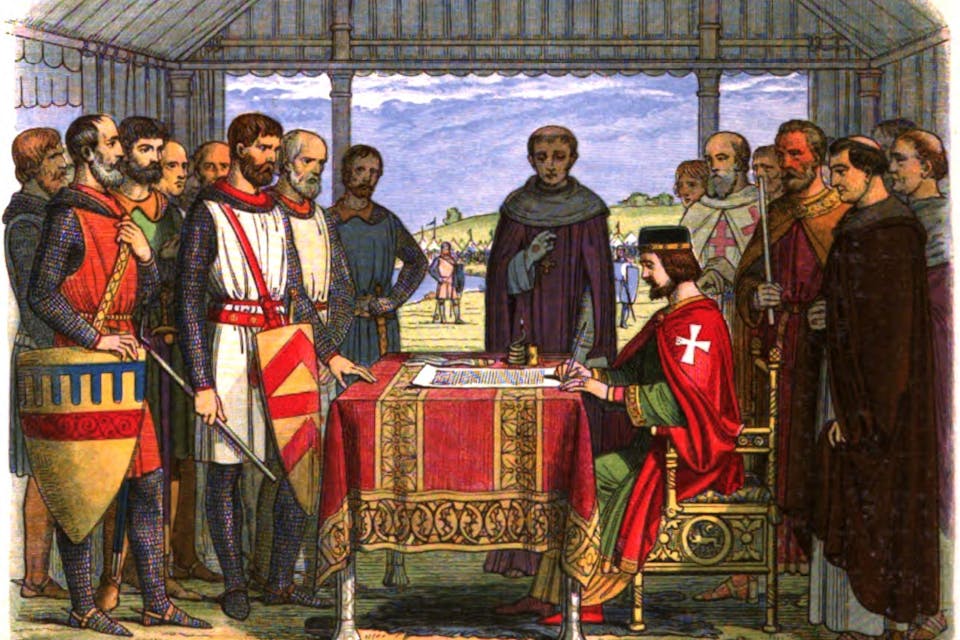
Eric Cohen and Jonathan Silver’s eloquent and timely essay calls for a renewed awakening of American Hebraism. I wholeheartedly agree with them. I believe that a Hebrew Christian awakening, and in particular a fresh understanding of covenant politics of freedom and responsibility, would serve three powerful purposes: first, it would make an indispensable contribution to the renewal of the American experiment; second, it would be a vital counter to the mounting anti-Semitism of our day, which is not only evil but, in light of all the Jewish people have contributed, profoundly foolish; and third, it would stand as the best and surest counter to the global menace of our time: unprincipled, unbounded power and authoritarianism. It is often said that the West owes everything to three cities, Athens, Rome, and Jerusalem, with Athens usually heralded as number one. That is entirely wrong. The first great debt of the West is not to a city, but to a desert: to a burning bush, a smoking mountain, and the revolution of Mount Sinai. It is time that the great truths of Sinai are recognized as the true Magna Carta of humanity and the surest foundation of the American Republic.
Western political thinking usually begins and ends as variations on the classical Greek categories of politics so well set out by Plato, Aristotle, and Polybius—monarchy, aristocracy, and democracy, each one with an ideal form and a corrupt form: monarchy descending into tyranny, aristocracy into oligarchy, and democracy into lawlessness and mob rule. These are invaluable categories by which to assess governments, and their entire classical discussion is rich, fruitful, and not to be forgotten. But they are all about politics, power, and governments. They are about states, so they fail to do justice to societies seen as a whole, and they do not begin to do justice to a full understanding of the American republic and its history.
More recently, a different intellectual tradition has balanced this by categorizing societies and how they are formed and governed. Pioneering scholars such as Daniel Elazar, Michael Walzer, and Eric Nelson, and leading thinkers such as Rabbi Jonathan Sacks, have argued in different ways that there are three major types of societies—organic societies, such as a tribe and a clan, linked by blood and kinship; hierarchical societies, such as kingdoms and empires, initiated by conquest and linked by structure and power; and covenantal societies, linked by a common binding agreement of the people. Of these three, covenant societies are the rarest, but they are also the richest in the promise they hold for societies prizing the highest ideals of freedom and responsibility, and thus a sure path forward to a human-friendly future. The two most prominent examples are Israel’s covenant at Mount Sinai, and the combined promise of the American Declaration of Independence in 1776 and the U.S. Constitution in 1787.


