

December 24, 2014
Do We Learn Only through Terrible Pain?
It's hard to read the story of Joseph and his brothers without asking that question.
The Torah reading of Vayigash (Genesis 44:18 – 47:27) shifts about in time and space between Egypt and Canaan, but starts and ends at the throne of Egypt. Its central theme is who should wield power and how, and the choice is illustrated through two sons of Jacob, neither of them the eldest, who square off in front of the throne.
Joseph, you will recall, was the chief of his father’s hopes. “These are the chronicles of Jacob,” the Torah has told us (Genesis 37: 2), and goes on: “Joseph was seventeen years old.” That’s it. No ten older sons, just Joseph. And then things go awry. In the next line we learn that whenever the brothers are out with the sheep in the field, Joseph acts as his father’s surrogate overseer, reporting their misdemeanors back to him.
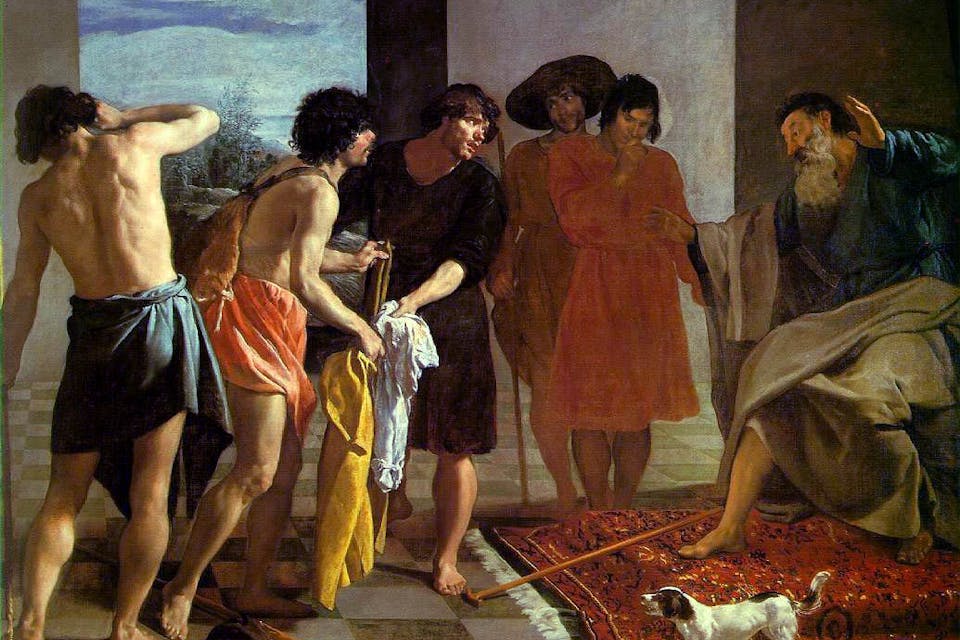
Next thing you know, Joseph’s brothers have stripped him of his multicolored coat and thrown him in a pit. Two of his older brothers, who could be viewed as in loco parentis, fail to protect him. Reuben, the eldest, wanders off; on returning, he finds Joseph gone from the pit, and announces that he has no idea what to do. Judah, not the eldest but the brother who even at this stage is a little more effective, talks his siblings into selling Joseph for profit to a passing band of their Ishmaelite cousins.