

June 30, 2016
Why the Generation that Left Egypt Was Kept in the Desert
They looked inside themselves and saw only their own fear, not the confidence needed to make the land of Israel their own.
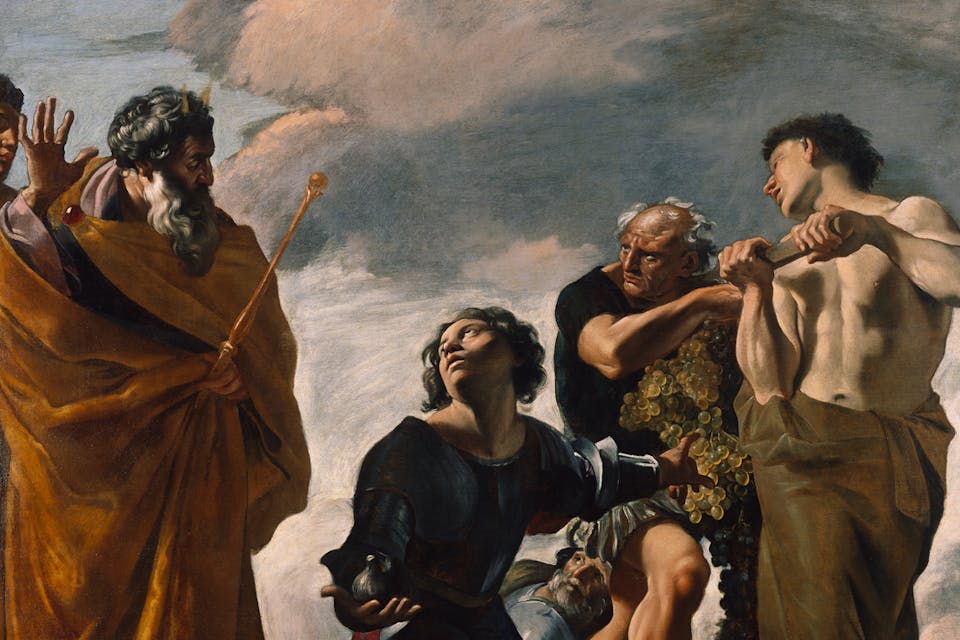
This week’s reading of Shlaḥ l’kha (Numbers 13-15) is unusual for focusing less on the Almighty’s relationship with the children of Israel than on the latter’s view of themselves—on what’s in their own heads. The title echoes that of Lekh l’kha (Genesis 12-17), where the Lord tells Abraham to leave his father’s house and his idol-worshipping native land and “go for yourself” to a promised land where the Lord will make him into a great nation. Our reading, analogously, begins with God commanding that select Israelites be sent from the desert encampment to scout out the promised land. But here is a crucial difference: shlaḥ l’kha means not “go for yourself” but “send for yourself.” The ensuing events reveal not what the Israelites actually see but who they think they are:
“Send for yourself some upstanding citizens to look over the land of Canaan
Which I’m giving to the children of Israel. One man apiece per ancestral house,
Send leaders from each one of them.”
And Moses sent them from the Paran desert as the Lord said,
Each of them upstanding citizens, the cream of Israel.
What follows is a list of names, most of which are never heard of again. The two exceptions are Caleb son of Yefuneh, representing the house of Judah, and Joshua son of Nun, representing the tribe of Ephraim and already firmly identified as Moses’ assistant. Just as the earlier confrontation between Jacob’s sons Judah and Joseph (i.e., the father of Ephraim) is the climax of the final narrative arc of Genesis, and just as, later, the Israelite kingdom will be split into two polities dominated by the tribes of Judah and Ephraim, here, too, we see the people’s future course depending on these same two houses.