
Response ·
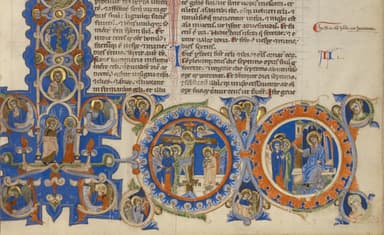
The Messages about Jews in Christian Art
By Edward RothsteinAnd how Jews used art to send messages about themselves.

Response ·
And how Jews used art to send messages about themselves.
Observations ·
Could "It’s easier to take the Jew out of exile than to take exile out of the Jew" and "You can take the boy out of the country but you can't take the country out of the boy" have shared roots?

Observations ·
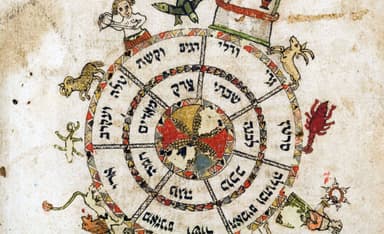
A rivalry between the Jewish numerical and European pagan-astronomical nomenclatures for the seven-day week has played out over millennia across the world.
Monthly Essay ·
As America's universities catch fire and its Jewish students grow more fearful, the field most likely to have something to say has remained silent—or worse. How did it go wrong?

Observations ·
Jews in Arab lands spoke much the same Arabic as their neighbors. But the notion that they thought of themselves as Arab Jews, pushed now in some circles, is a historical absurdity.

Response ·
Technologies have radically changed religions in the past. But that doesn't mean they'll do so this time.

Response ·
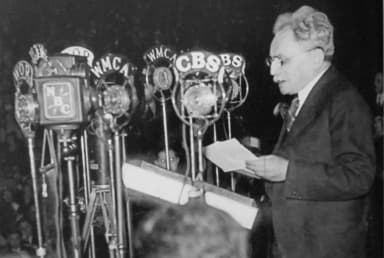
Abraham Cahan's still-relevant vision of America's place in the world, and the Jews' place in America.
Monthly Essay ·
Abraham Cahan was one of America's first great Jewish newspapermen, and set an example of independent thinking that the nation could sorely use today.
Observations ·
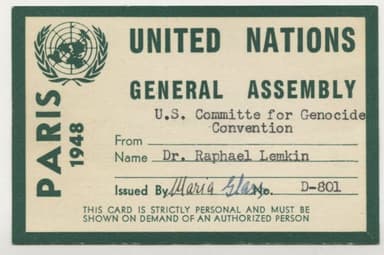
A Jewish lawyer coined the term because there was no word that described the murder of a whole people. But the definition he favored is so loose it can apply to almost any conflict.
Monthly Essay ·
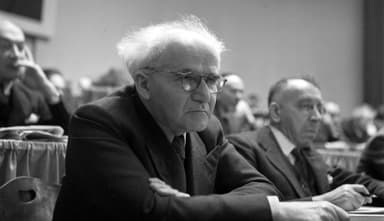
Israel’s founding father argued for a conception of politics uniquely tailored to the Jewish state. Fifty years after his death, his country could use it more than ever.
Observations ·
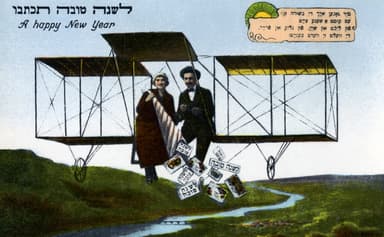
Some years in the Jewish calendar, like the current one, have an extra month. How'd that come about and why?
Response ·
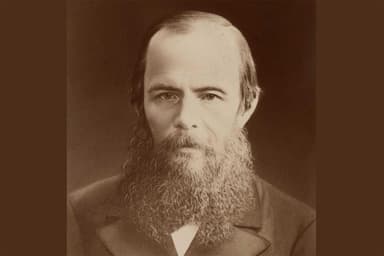
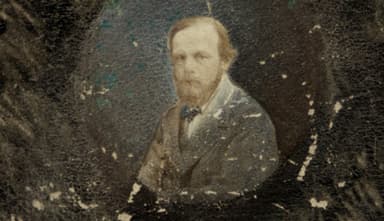
Many Dostoevsky scholars have been Jews, perhaps because the anti-Semitic writer needed to be seen as theirs—as almost Jewish in his concerns.
Observations ·
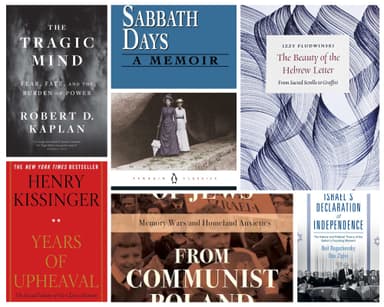
Featuring fears, fates, burdens of power, memory wars, Sabbath days, Russian writers and timeless questions, years of upheaval, Japanese Jews, and more.
Observations ·
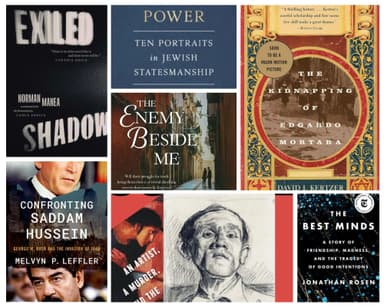
Featuring prime ministers, kidnappings, popes, silences, exiled shadows, portraits, intellectual origins, the best minds, and more.
Response ·
That's why geniuses like Dostoevsky can love all humanity and hate the Jews.
Observations ·
Rarely heard in the speech of most Israelis in the past, b’sorot tovot, an ironic “good news,” has suddenly become a common way of saying goodbye.

Observations ·
Most wars, including the current one, are just called “the war” at first. The names that stick usually come years and sometimes centuries later.

Response ·
Nixon and Kissinger understood Israeli military power to be an asset to America, not a liability, and they formulated a strategy designed to exploit that power.

Response ·
Acquiescing to American restraint would have led to an Israeli defeat, and peace between Egypt and Israel might never have happened.

Response ·
For the West, what's at stake now is not just the safety of Israel's citizens, but its own.

Monthly Essay ·
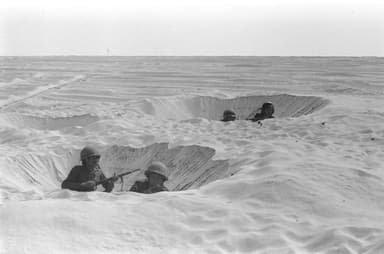
It's long been the greatest question about the war: why Israel waited to be attacked. But what if it was convinced to wait by its closest ally, the United States?
Monthly Essay ·
How generations of Arab thinkers and leaders tried to turn the humiliation of their losses to Israel into a springboard to launch their nations into an enchanted new age.

Observations ·
What might the great scholar have been intending with a recently discovered list he made of seemingly random words from random European languages?

Observations ·
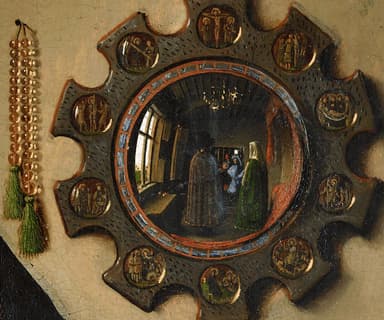
A misunderstanding about mirrors, with far-reaching, metaphysical consequences.
Observations ·
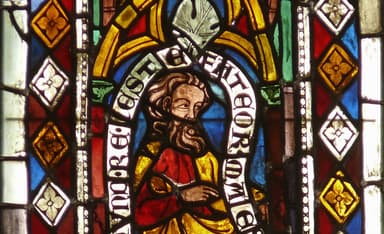
A reader's question prompts Philologos to turn up a crucial link between the three.
Response ·
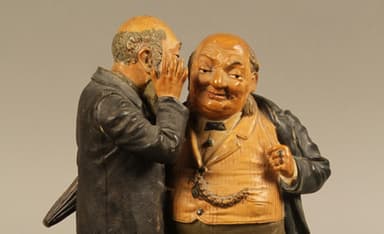
The cultural chaos of the current era seems to map perfectly onto the anxieties of the 19th century. The same goes for today's flavor of anti-Semitism.
Observations ·
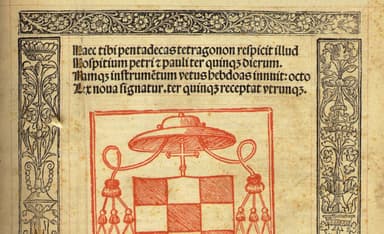
How many rabbis first translated the Hebrew Bible, and how many different translations did they produce?
Response ·
Insects may be welcome on European plates, but not kosher meat.

Response ·
European hypocrisy on animal rights and ritual slaughter comes straight from an ancient Christian heresy.

Observations ·
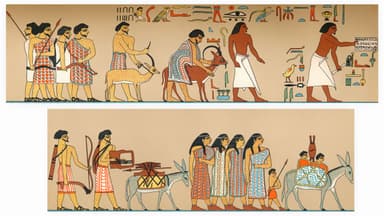
And does their presence illuminate the book of Exodus—or is it simply a sign that ancient Egypt was a powerful nation?
Unlock the most serious Jewish, Zionist, and American thinking.
Subscribe Now