
Response ·
The Mind and Man Behind Philologos
By Hillel Halkin, Jonathan Silver, Andrew KossA conversation about Jews and language.


Response ·
A conversation about Jews and language.
Observations ·
Only one was a mark of prestige for ancient rabbis.

Observations ·
Even as it becomes clear who will emerge victorious.

Observations ·
American Jewry has spent over $100 million in Hebrew education. The results are far from impressive.
Observations ·
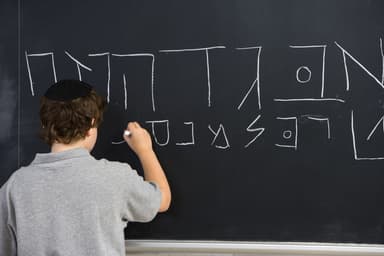
All nouns and adjectives in Hebrew are gendered. Why do those genders keep switching?

Observations ·
Hebrew is full of goats these days, and English and French aren't too far behind. Where'd they all come from?

Observations ·
Rarely heard in the speech of most Israelis in the past, b’sorot tovot, an ironic “good news,” has suddenly become a common way of saying goodbye.

Observations ·
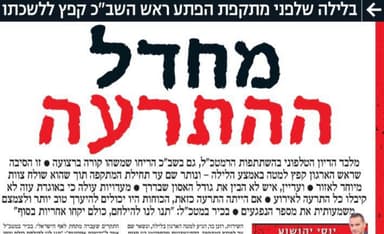
A meḥdal occurred in 1973. It has now, in an eerily similar way, occurred again. What exactly does it mean in English?
Observations ·
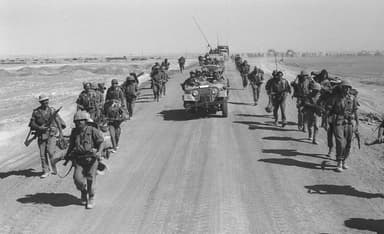
In the wake of the Yom Kippur War, the words yom kippur shel, “the Yom Kippur of,” have referred in Israeli speech to any debacle that might have been prevented by better judgment.
Observations ·
Hebrew was once written in both directions. How did it fix its direction, and what does that show about the history of writing in general?

Observations ·
The word, like a small number of other Egyptian loanwords in the Bible, testifies to a period in which the early Israelite nation, or a part of it, was in intimate contact with Egyptian life.

Observations ·
The Blue-and-White party has transformed into . . . well, it's unclear, at least in English.

Observations ·
The deultimization of the Hebrew language proceeds apace.
Observations ·
In the end, one doesn’t know what to be struck by more: the fact that a computer can translate Hebrew at all, or the fact that when it does, it does so atrociously.

Observations ·
Only in Schopfloch, as far as I know, have a large number of originally Jewish words survived in the speech of the local populace to this day.

Observations ·
"An earthquake in biblical scholarship” is how the discovery has been described. That's true, as are the connections it reveals between ancient languages and modern ones.

Observations ·
And why each has been preferred in different times and places.

Observations ·
Quite a few masculine and feminine Hebrew words, when pluralized, take the form of the opposite gender. Why?

Observations ·
As tracked through the waxing and waning value of the Hebrew words for "departees" and "descenders."

Observations ·
In anti- and post-Zionist circles, the verb of choice for immigrating to Israel has been replaced by something less romantic.

Observations ·
The Israeli actress recently released “Gal Gadot Teaches You Hebrew Slang,” a short video from Vanity Fair. She turns out not to be such a good teacher, but it doesn't matter much.

Observations ·
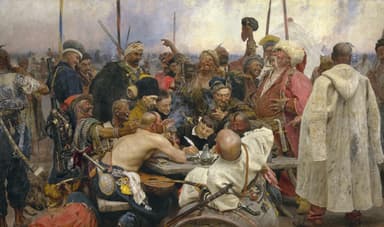
A versatile fellow, this Cossack, identified simultaneously with Israel’s prime minister and his bitterest opponents! Who is he and who robbed him?
Observations ·
In English, one “wears” just about everything, from clothes to hats to perfume. In Hebrew, there's a different verb for each of these items and more.

Observations ·
What separates language from language, and language from dialect.

Observations ·
A letter from recently opened archives of the great writer makes clear how seriously he took the language, and by extension a possible move to Palestine.
Observations ·
Take, for instance, the word tararam, meaning—what else?—“fuss" or "hullabaloo."
Observations ·
There were many more illiterate Jews in the Tsarist empire than we tend to think there were.
Observations ·
A Mosaic reader was able to solve the mystery of the Yiddish expression tapn a vant, “to grope a wall.”

Observations ·
From Hebrew to Spanish to German to Italian and onward, the term is now as international as Coca-Cola.

Observations ·
The many hypothesized sources for the saying, “To have butter on one's head.”

Unlock the most serious Jewish, Zionist, and American thinking.
Subscribe Now